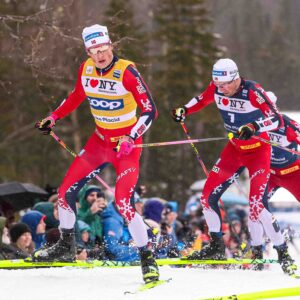
Trail running: good training for cross-country skiers

Trail running is quite a natural form of training for cross-country skiers, as repetitive strain injury is avoided in varied terrains, and smaller muscle groups are also put to work. Jogging in the woods also offers other benefits for both competitive skiing and training.
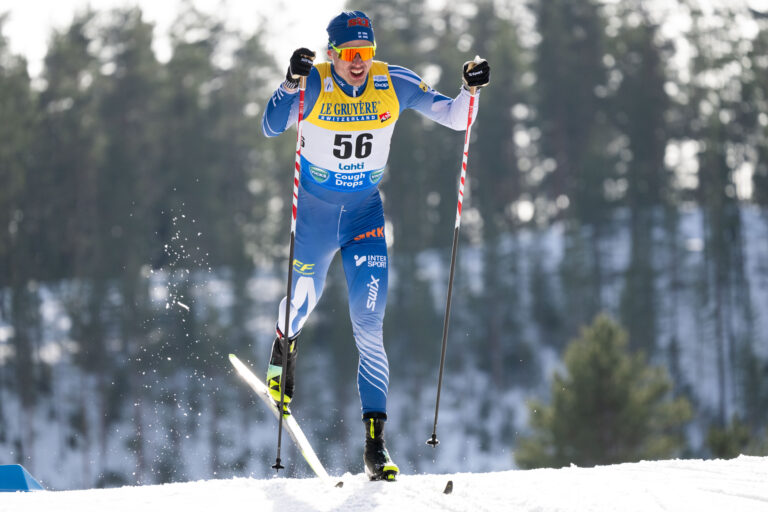
Finnish Joni Seppä, who raced at the trail running World Championships and has a background as a competitive skier, believes that trail running is, along with roller skiing, one of the most important forms of summer training for a cross-country skier. As in skiing and trail running, you move in varying terrains.
Seppä, who offers trail running coaching in Rovaniemi, Finland, says he was already taught the benefits of trail running in his junior years.
“We were told it is always better to go on the trails than on the track, let alone on a flat country road. On the trails, every step is different, so even the smaller supporting muscles of the legs and hips get stimuli,” says Joni Seppä to Maastohiihto.com.
By using trails, you can avoid repetitive strain injuries. The muscles also stay active and adapt to each step, improving elasticity. That’s why trail running is more sport-specific from a skiing perspective than running on flat terrain.
Seppä points out that trail running also has factors that promote mental health.
“Yes, the prettiest places are usually found on trails. Roads have rarely been built in nature’s most beautiful places, but the trails almost always lead to them. It has a big impact on the enjoyment of training.”
Joni disagrees with those who consider trail running an injury-prone sport. For example, ankle sprains happen to him more often on the tracks than on the forest trails.
“Usually, when we run on the trails, the psyche prepares for it, and we are more focused. Injuries usually occur when attention is at its weakest.”
Although, in Sepä’s opinion, the sport is not prone to injury, it is suitable for beginners to progress according to their skill levels, and, for example, you should only increase the speed when it feels natural. Courage increases as the kilometers accumulate.
Trail running and equipment
Numerous trail running shoes are on the market today, and choosing among them can be difficult. However, Seppa believes the most important thing is the shoe’s fit on your foot.
“When I was younger, I ran with regular sneakers on the same trails still covered today, and I was fine with them too.”
So, you can easily get started without buying any equipment, but Seppä recommends shoes with a slightly rougher material than regular sneakers for those who are more into the sport.
It is especially important to get a good feel for the construction because then you avoid unnecessary twisting of the ankle and tripping.
Summer competitions are good training
Seppä also encourages skiers to participate in summer trail running competitions. He believes they are good training that offers the same stimulus as skiing competitions.
“I’ve been surprised that nowadays skiers compete very little, other than in winter. It is quite difficult psychologically if the months go away without competitions, and you have to start competing in the fall. It feels that building the right form is behind the schedule.”
Summer trail running events are also good training competitions for recreational skiers aiming for long-distance skiing events.
When you have prepared for climbing hills during the winter, it will also be easier in the summer. The same is also true the other way around.
“Trail running and skiing are very similar in terms of training and competition performance, even though the sports are different. They support each other well, and trail running enables a year-round competition season,” concludes Joni Seppä.
Are you interested in traditional and long-distance skiing training? Click HERE and read more.
Subscribe to our newsletter
Most read
-
12.11.2026
-
17.11.2026
-
-
14.10.2026
-
22.10.2026


More Articles
-
Finland names its team for the Ruka World Cup opener
The 2026/2027 cross-country skiing World Cup season starts this week in Ruka, Finland, and the Finnish Ski Association has named its team for the home opener. Finland will field 36 skiers, 18 women and 18 men, with ten Finns per gender in each of the three events.24.11.2026