Johannes Lukas: “My job never gets boring”
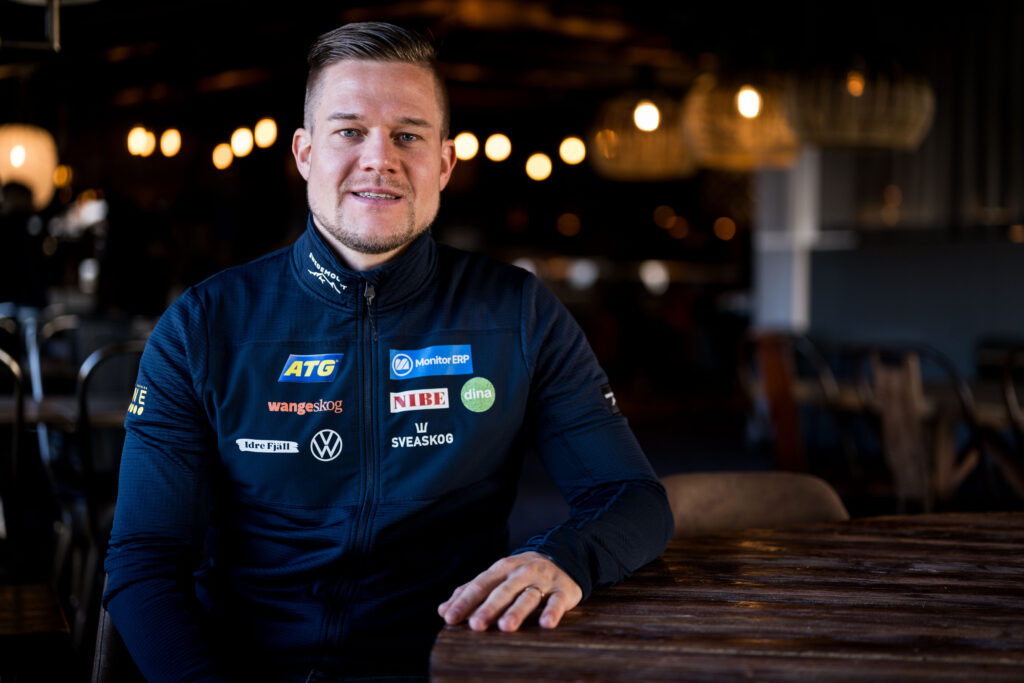
Seven winters as head coach. 32 championship medals. A new four-year contract. In Idre, Johannes Lukas talks about the next generation, the pregnancy announcements and the newcomer he sometimes has to speak English with.
He has done what few thought was possible. He has matched the results of the legendary Wolfgang Pichler. Now the head coach of the Swedish biathlon national team has extended his contract by another four years.
“I feel that I am not finished. My job also never gets boring,” says the 33-year-old German with roots in Munich.
Plagued by injuries – stopped racing at 21
For those who do not know the story of Johannes Lukas before he became head coach of the Swedish biathlon national team, here is a short version. Johannes Lukas was a promising German junior biathlete, but he was plagued by injuries. Because of that, he stopped racing at just 21.
After studying in Munich, he contacted Wolfgang Pichler. The year was 2015. At the time, the legendary coach was head of the Swedish biathlon national team. Lukas got an unpaid internship and worked for free with technique and strength training alongside Pichler. Ahead of the 2019 Biathlon World Championships in Östersund, he became Pichler’s assistant coach, and when Pichler left, Lukas took over as head of the Swedish biathlon national team.
Matched Pichler’s record
And a very successful one. Sweden has won 32 championship medals under his leadership: 25 World Championship medals and 7 Olympic medals, 8 of them gold.
That is – in fact – exactly as many medals as Sweden won under Wolfgang Pichler, if you include the years Pichler was Magdalena Forsberg’s personal coach (1998–2002). Under Pichler, Sweden won 24 World Championship medals and 8 Olympic medals, 11 of them gold. (If you leave out the years he was Forsberg’s personal coach, Sweden won 22 medals under his leadership.)
Feels trusted
The reason Johannes Lukas is happy and staying is that he feels trusted by both the athletes and the Biathlon Association.
“It is a very innovative federation. It is building new conditions at all levels. That is what motivates me,” says Lukas according to Langd.se.
Read More: Johannes Lukas continues as Swedish national team coach
Who do you think can surprise this winter?
“If you look at the overall picture and how the training year has gone, Martin Ponsiluoma and Elvira Öberg have had really good training years with continuity and no injuries. But they are no surprises,” says Johannes Lukas, and continues.
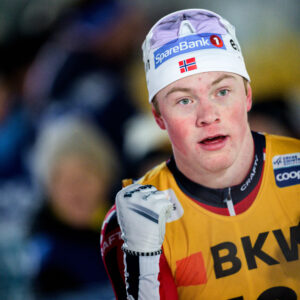
“If you look at who will take the biggest step, it is probably Philip (Lindqvist Flötten).”
“Hard to understand him – we had to switch to English”
New athletes do not join the team very often – at least not on the men’s side. What has it been like to bring him in?
“It was hard to understand him at first. He spoke Norwegian and we sometimes had to switch to English. It felt like starting from zero,” says Johannes Lukas.
He smiles at the memory. For him, things like that keep the fire alive.
“He is a completely new person that you have to get to know. That gives me a lot of energy, and it means my job never gets boring.”
The article continues below.
Started building for the future
What does the next generation look like otherwise? Quite a few athletes have been on the national team for a long time now and may choose to retire within a few years.
“We have a clear strategy from the whole federation to secure the next generation. We have Team Nibe, which is our development team, and we also have Team Dina Försäkringar, which is our junior national team. The athletes on those teams have trained quite a bit with the A team this summer, including at our camps in France and Morocco.”
Johannes Lukas continues.
“When you think about the 2030 Olympics and that we have a home World Championships in 2031, it sounds far away. But it comes fast, and we have to start building for it already now.”
That is how long your new contract runs. Is that connected to the strategy?
“No. It is not me we are talking about now. We are talking about the federation and the strategy it has set out. But I am part of the whole thing. And I always find it rewarding and inspiring to see new names and get to know new athletes to develop. If you take Philip as an example, he joined the team this summer. Everything was new for him. But it was also new for me. Things like that give me a lot of energy.”
Not a given to be able to start a family
Both Hanna Öberg and Linn Gestblom are missing from the women’s team this season. Can the women continue to have great success this winter without them?
“First of all, I think it is fantastic that they choose to go this way and start a family. Unfortunately, it is not a given that female athletes can have a family while being elite athletes. With the system we have in the biathlon federation, we have shown that it is possible, so I just think it is very positive.”
Johannes Lukas continues.
“Then, if you look at it purely from a sporting point of view, of course we lose 50 percent of the relay team from recent years. That will not be easy to replace, but you also have to see the opportunities. Maybe we will not be big favorites in every relay, but more athletes will get the chance to race. Maybe someone new will also break into the World Cup this winter or get the chance to race in the World Championship relay. In the long term, this may actually be quite good.”
Read More – Olympic star reveals: Pregnant
No stress for new athletes
What about athletes who are new, or on the edge of the national team? Should they get to race in the World Cup, or should they aim for the IBU Cup (the level below) instead?
“I do not think you should stress new athletes. If you look at Philip, for example, he wants to develop everything. He wants to be the best. In the long term, that is great. But if you race a lot in the World Cup and keep finishing 60th to 80th and do not manage to qualify for the pursuits, you get few races. That can quickly become frustrating. Then it is better to compete for top placings in the IBU Cup and build confidence there.”
Will any new athlete get the chance to race at the World Championships this winter?
“It is impossible to answer that question now. But on paper, everyone has a chance, according to the selection criteria.”
World Championship medals are realistic
The national team has won 32 championship medals in seven years while you have been in charge. That is an average of 4.5 medals per season. What is your medal goal for the World Championships in Otepää?
“I do not usually talk about medal goals, but the federation’s goal is to win medals on both the women’s and the men’s side. That is realistic, but you also need a bit of luck. We often have a better second week than first week at a championship.”
If Johannes Lukas leads Sweden to the federation’s medal goal in Otepää, it will not only mean new medals for the athletes. It would also mean that Johannes Lukas passes the legendary Pichler in the number of medals as head coach of the Swedish biathlon national team.
Read More – Biathlon World Cup: Calendar for the 2026/2027 winter season
Are you interested in biathlon? Click HERE and read more about it.
Subscribe to our newsletter
Most read
-
23.11.2026
-
09.11.2026
-
06.10.2026
-
08.11.2026
-
10.11.2026
More Articles
-
Why many endurance athletes incorporate heat training into their training programs
For some time now, we have observed the emergence of a practice in high-level endurance sports training. You may have already seen athletes on social media or in person training while wearing multiple layers of clothing, even when the weather and temperatures are quite mild.22.11.2026