FIS race director: What new developments and challenges await the cross-country World Cup

It is no news that the traditional skiing disciplines find themselves at a crossroads. But when FIS cross-country race director Michal Lamplot took the floor at the journalists’ autumn Forum Nordicum, it was clear that the International Ski Federation no longer wants to just describe the problems. It is preparing to act.
Behind the scenes, there is talk of fundamental reforms: from regulating astronomical wax service costs to question marks over what the future of classic technique will look like and whether skiing can adapt to a warming planet.
The 2026/2027 season
In terms of the near future, the World Cup has plenty to boast about. The coming winter will offer the traditional opening in the north in Ruka, followed by a move to Trondheim and Davos, Switzerland. A huge attraction will be the prestigious Tour de Ski, which after a two-year hiatus returns to the attractive format of three countries and three different host venues. For the very first time, it will start in the French resort of Les Rousses, from where the field will move to Oberstdorf, Germany, and the winner will be decided by the traditional climb up the Alpe Cermis in Val di Fiemme.
Read more: Complete World Cup schedule for classical skiing 2026/2027
The sporting highlight of the coming season will clearly be the World Championships in Falun, Sweden, at the turn of February and March. Unlike ski jumping or Nordic combined, cross-country skiing cannot complain about fan interest. The organizers in Falun report practically sold-out capacity: a cauldron of 50,000 spectators is expected for the distance races, while the sprints will hold 20,000 people.
The calendar will also be enlivened by the return of the popular Engadin race from St. Moritz to Surlej, the brutal combination of two 50km marathons in Holmenkollen and Falun back-to-back, and the season finale in Ulricehamn, Sweden.
Behind this packed upcoming season, however, lie systemic cracks that FIS can no longer ignore.
When the sport becomes a luxury
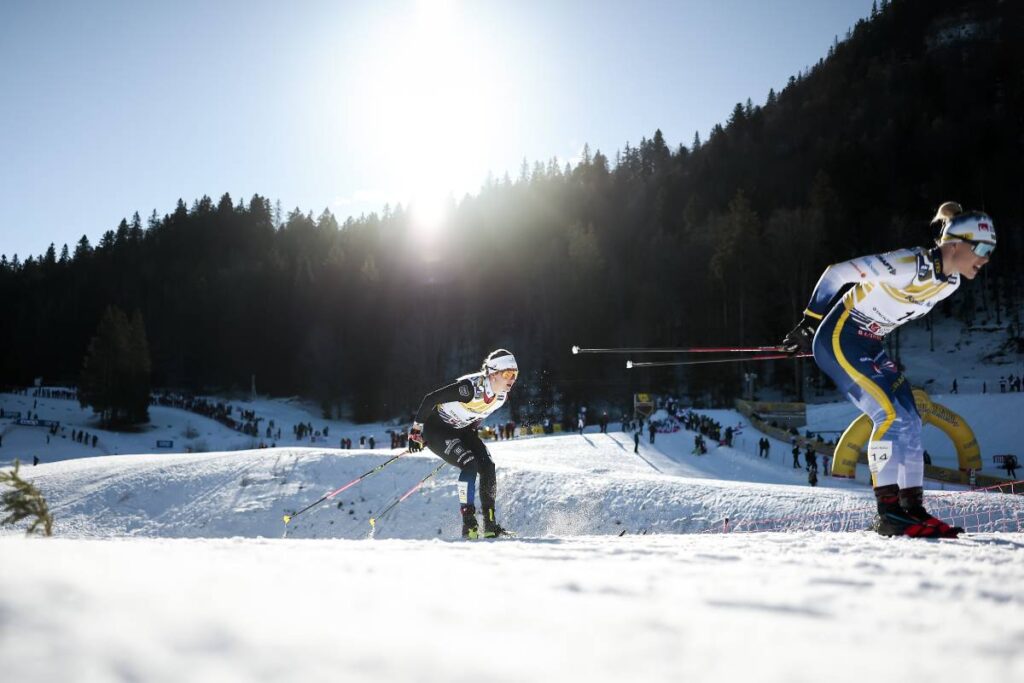
The biggest pain point of today’s cross-country skiing is the dominance of just a handful of chosen nations. If you leave out Scandinavia and Germany, the rest of the world often just plays second fiddle. FIS has therefore decided to step in with rule changes. For the coming period, stricter rules on start quotas and so-called athlete caps are coming into play: limits on the total number of athletes a single national team can enter per race weekend. The goal is clear: to even out the start field somewhat and prevent the giants from filling the entire top 20.
Closely related to this is the financial side. Cross-country skiing may not be Formula 1, but technological ski preparation, testing and service support have reached the limit of what smaller federations can afford. FIS is therefore drastically limiting the size of service teams and adjusting the on-snow testing zones. Joint waxing projects are also on the agenda, for example in the form of a neutral wax service for smaller teams at championships or at the Junior World Championships in Estonia.
And this is not only about the elite level. Extreme costs are also crushing the youth categories. A situation where 14-year-old athletes travel to regional championships with a dozen pairs of skis and a wax truck is, according to FIS, unsustainable. When families cannot afford equipment for both classic and skating, the sport loses talents before they even grow into the national team. The path to fixing this is meant to be strict regulations and limits on permitted equipment in the children’s and youth categories.
Does classic technique have a future?
A question that sparks debate behind the scenes of cross-country skiing: Should we keep two techniques? Supporters of simplification and savings point to biathlon and Nordic combined, which switched exclusively to skating, significantly reducing the financial demands on athletes’ equipment.
Michal Lamplot, however, is clear on this matter, even though he admits that internal discussions within FIS are ongoing: “Classic is an inseparable part of cross-country skiing and forms its DNA. Instead of abolishing one of the techniques, FIS would rather look for ways to make formats combining both techniques in a single race more attractive to spectators. The unique alternation of movement patterns and tactical unpredictability are what set cross-country skiing apart from other winter sports,” Michal Lamplot explains the position.
Planned changes
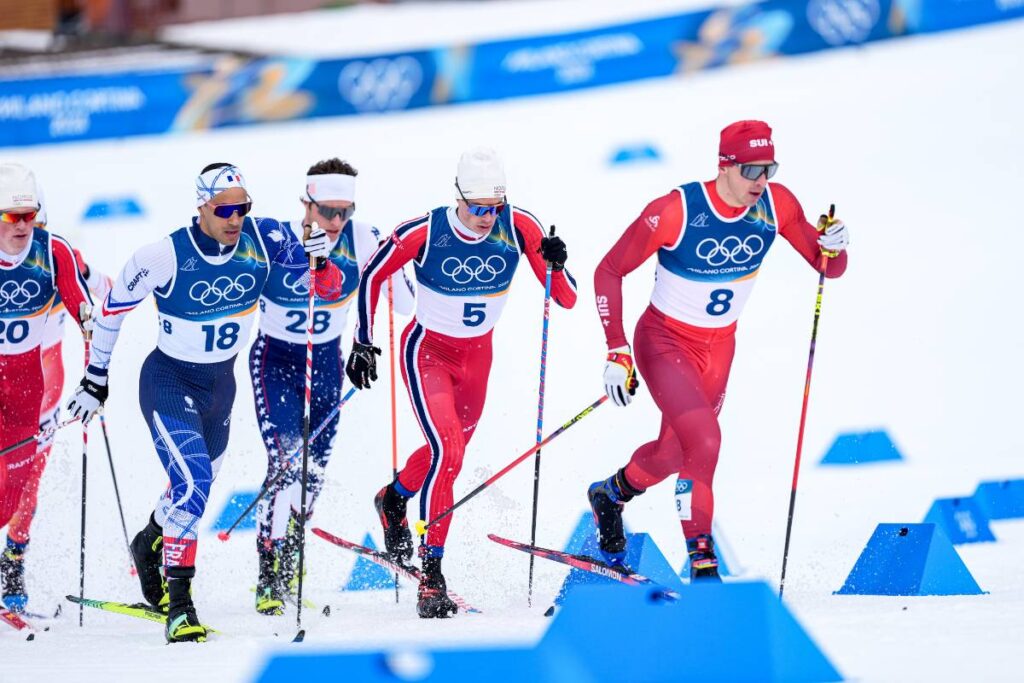
To bring cross-country skiing to new audiences and raise its commercial value, FIS is preparing an extensive visual overhaul. Athletes and fans in front of their screens can look forward to completely new TV graphics, better storytelling beyond the podium, and unified broadcast quality thanks to the centralization of TV rights.
Another major new feature will be the return of a standalone World Cup final from the 2027/2028 season. This concept, known from the past decade, is meant to create a premium peak at the very end of winter, where the battle for the crystal globes will be in the spotlight.
Responding to climate change
The last, but perhaps most fundamental, challenge remains climate change. The lack of snowfall at lower elevations in Central and Southern Europe is no longer a future threat, but a daily reality.
FIS is therefore increasingly betting on roller skiing. It is no longer seen only as a training supplement for summer drills, but as a full-fledged tool for promoting the sport and entering new markets. Roller skiing is meant to open doors to countries and urban areas where natural snow practically does not exist, with the rapid growth of the Asian Cup in China and Taiwan as a great example. Going forward, even a closer link between the summer roller skiing series and the winter one is not ruled out.
Also Read – Falun World Championships 2027: here is the complete competition schedule
Are you interested in traditional cross-country skiing? Click HERE and read more about it.
Subscribe to our newsletter
Most read
-
11.05.2026
-
07.05.2026
-
09.05.2026
-
28.09.2026
-
13.09.2026




More Articles
-
Exile, training, and survival: Inside Ukraine’s cross-country ski program
More than four years have passed since the war stopped being a distant threat and began dictating, day after day, the calendar of the Ukrainian cross-country ski team. Results on the snow are almost secondary: for athletes and coaches, staying on the FIS circuit means, above all, staying together as a team.21.10.2026