Olympics 2026: Complete guide to the women’s 10km interval start in freestyle technique
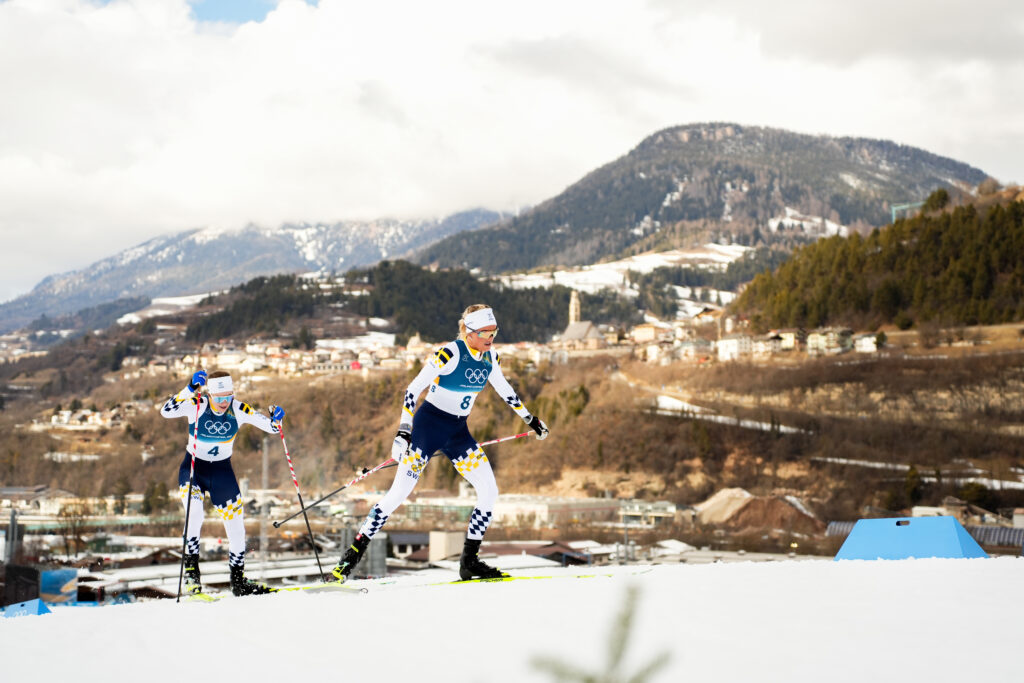
In the 10km interval start, it’s all about pacing and precision. With 30-second intervals, the athletes race against the clock and themselves. One small mistake can cost an Olympic medal.
Thursday, February 12: 10km Interval Start Freestyle Women (More information can be found HERE)
- 13:00 CET: 10km Interval F, Women
The start lists can be found HERE
ABOUT THURSDAY’S RACE
The 10km individual was the first women’s competition to enter the Winter Olympics in 1952 (Oslo) and the World Championships in 1954.
The format has changed several times over the years. For many seasons, the shortest distance for women was 5km. From 1992 to 1998, the 10km free was held as a pursuit based on a 5km classic race. In 2002, the 5km free pursuit was also based on a 5km classic event.
However, the 10km remains a standalone discipline. In a traditional individual race, athletes start at 30-second intervals, and the athlete with the fastest overall time wins. This year, the technique is freestyle (skating).
Women’s 10km Olympic Champions
- 1952 Oslo: Lydia Wideman, Finland
- 1956 Cortina d’Ampezzo: Lyubov Kozyreva, Soviet Union
- 1960 Squaw Valley: Maria Gusakova, Soviet Union
- 1964 Innsbruck: Klavdiya Boyarskikh, Soviet Union
- 1968 Grenoble: Toini Gustafsson, Sweden
- 1972 Sapporo: Galina Kulakova, Soviet Union
- 1976 Innsbruck: Raisa Smetanina, Soviet Union
- 1980 Lake Placid: Barbara Petzold, East Germany
- 1984 Sarajevo: Marja Liisa Hämäläinen, Finland
- 1988 Calgary: Vida Vencienė, Soviet Union
- 2002 Salt Lake City: Bente Skari, Norway
- 2006 Turin: Kristina Šmigun, Estonia
- 2010 Vancouver: Charlotte Kalla, Sweden
- 2014 Sochi: Justyna Kowalczyk, Poland
- 2018 PyeongChang: Ragnhild Haga, Norway
- 2022 Beijing: Therese Johaug, Norway
Notes
• The 10km distance has alternated between classic and freestyle formats over the years.
WORLD CHAMPIONS 5km and 10KM
5km
- 1962 Alevtina Koltsjina, Soviet Union
- 1966 Alevtina Koltsjina, Soviet Union
- 1970 Galina Kulakova, Soviet Union
- 1974 Galina Kulakova, Soviet Union
- 1978 Helena Takalo, Finland
- 1982 Berit Aunli, Norway
- 1985 Anette Bøe, Norway
- 1987 Marjo Matikainen, Finland
- 1989 Not held at 5km
- 1991 Trude Dybendahl, Norway
- 1993 Larisa Lazutina, Russia
- 1995 Larisa Lazutina, Russia
- 1997 Elena Välbe, Russia
- 1999 Bente Martinsen, Norway
10km
- 1954 Ljubov Kozyreva, Soviet Union
- 1958 Alevtina Koltsjina, Soviet Union
- 1962 Alevtina Koltsjina, Soviet Union
- 1966 Klavdija Bojarskikh, Soviet Union
- 1970 Alevtina Oljunina, Soviet Union
- 1974 Galina Kulakova, Soviet Union
- 1978 Zinaida Amosova, Soviet Union
- 1982 Berit Aunli, Norway
- 1985 Anette Bøe, Norway
- 1987 Anne Jahren, Norway
- 1989 Marja-Liisa Kirvesniemi, Finland (classic)
- 1989 Elena Välbe, Soviet Union (freestyle)
- 1991 Elena Välbe, Soviet Union
- 1993-1999 Not held at 10km
- 2001 Bente Skari, Norway
- 2003 Bente Skari, Norway
- 2005 Katerina Neumannova, Czechia
- 2007 Katerina Neumannova, Czechia
- 2009 Aino-Kaisa Saarinen, Finland
- 2011 Marit Bjørgen, Norway
- 2013 Therese Johaug, Norway
- 2015 Charlotte Kalla, Sweden
- 2017 Marit Bjørgen, Norway
- 2019 Therese Johaug, Norway
- 2021 Therese Johaug, Norway
- 2023 Jessie Diggins, USA
- 2025 Ebba Andersson, Sweden
FAVORITES
Ebba Andersson, Sweden
The 2025 World Champion has not shown quite the same form this winter, apart from her silver medal in the Olympic skiathlon. However, everyone knows what Andersson is capable of. The harder the course, the better it suits her. The course in Val di Fiemme is demanding, though not the toughest on the circuit. The key question is whether she can reach last season’s level.
Also Read: Sweden storms to skiathlon gold and silver at Milano-Cortina 2026
Jessie Diggins, USA
This is one of her strongest events. The 2023 World Champion has made it clear that she is aiming for Olympic gold before retiring at the end of the season. The course suits her well, and few athletes can push themselves like Diggins. Her fighting spirit is unmatched, and she is an outstanding skater.
Read More: Jessie Diggins: portrait of an American icon in her golden final chapter
Frida Karlsson, Sweden
Last year, she had to wait until the 50km to claim individual gold. After winning the skiathlon earlier in the Games, she must be considered a strong medal contender, even if her results this winter have fluctuated.
OUTSIDERS
Karoline Simpson-Larsen, Norway
She has enjoyed a breakthrough season. Simpson-Larsen excels in skating and is one of the strongest climbers in the field. With no Olympic experience, handling the pressure will be crucial. If she manages that, a medal or top-six finish is possible.
Heidi Weng, Norway
The Norwegian veteran is competitive across most long distances. The 10km freestyle suits her, but she needs a strong opening to avoid losing time early. Weng climbs well, but the question remains whether she has the top speed required for a medal.
Moa Ilar, SWE
Currently runner-up in the World Cup standings heading into the Olympics, Ilar has also had a breakthrough winter. She is powerful and capable of maintaining high speed for extended periods. The challenge will be the tough climbs in Val di Fiemme. Although she won in classic in Oberhof, she is strong in both techniques.
You will find the start list HERE
Cross-country skiing schedule – Olympics 2026
Saturday, February 7: 20km Skiathlon C/F Women (More information can be found HERE)
- 13:00 CET: 20km Skiathlon C/F, Women
Sunday, February 8: 20km Skiathlon C/F Men (More information can be found HERE)
- 12:30 CET: 20km Skiathlon C/F, Men
Tuesday, February 10: Sprint C Women and Men (More information can be found HERE)
- 9:15 CET: Sprint Quali C, Women
- 9:55 CET: Sprint Quali C, Men
- 11:45 CET: Sprint Final C, Women
- 12:15 CET: Sprint Final C, Men
Thursday, February 12: 10km Interval Start F Women (More information can be found HERE)
- 13:00 CET: 10km Interval F, Women
Friday, February 13: 10km Interval Start F Men (More information can be found HERE)
- 11:45 CET: 10km Interval F, Men
Saturday, February 14: 4×7.5km Relay C/F Women (More information can be found HERE)
- 12:00 CET: 4×7.5km Relay C/F, Women
Sunday, February 15: 4×7.5km Relay C/F Men (More information can be found HERE)
- 12:00 CET: 4×7.5km Relay C/F, Men
Wednesday, February 18: Team Sprint Women and Men (More information can be found HERE)
- 9:45 CET: Team Sprint F Quali, Women
- 9:45 CET: Team Sprint F Quali, Men
- 11:45 CET: Team Sprint F, Women
- 11:45 CET: Team Sprint F, Men
Saturday, February 21: 50km Mass Start C Men (More information can be found HERE)
- 11:00 CET: 50km Mass Start C, Men
Sunday, February 22: 50km Mass Start C Women (More information can be found HERE)
- 10:00 CET: 50km Mass Start C, Women
Complete program for the Winter Olympic Games can be found HERE
Val di Fiemme, a classic Nordic skiing venue, promises thrilling racing on courses steeped in Olympic history. Fans around the World will have the chance to cheer on athletes across all distances, from explosive sprints to grueling marathons.
Are you interested in traditional cross-country skiing? Click HERE and read more about it.
As a member of ProXCskiing.com, you get full access to all content on the site. Also, live streaming of Ski Classics events with English commentaries is available.
When you become part of one of the World’s leading XC ski communities, you will receive many exclusive offers all year round.

Subscribe to our newsletter
Most read
-
21.02.2026
-
03.12.2021
-
22.02.2026
-
30.08.2026
-
18.02.2026


More Articles
-
Tour of Slovakia stage 5: The climb where everything will be decided
There is plenty of excitement ahead of the final stage of the Tour of Slovakia. For the first time in the race's history, the riders will finish with the brutal climb to Kráľová hoľa, at an altitude of 1,934 meters.20.09.2026