Marcialonga step by step: What to expect on the course and where it will start to hurt
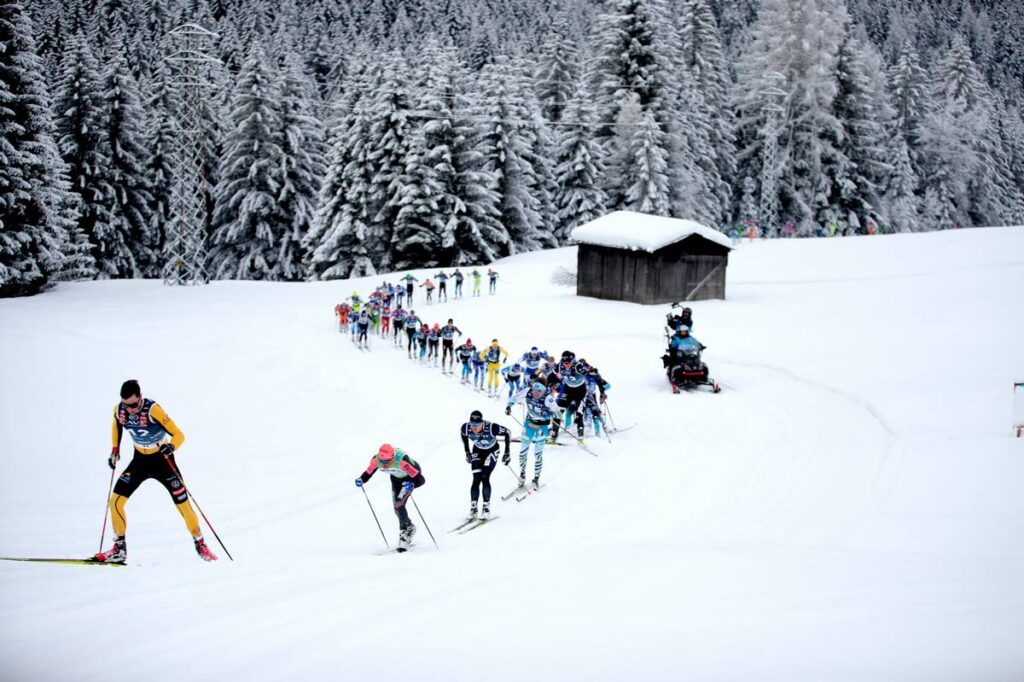
The Marcialonga has been held on the last Sunday of January since 1971. True, it has a slightly shorter history than Jizerská50, but with far greater snow reliability, for reasons I’ll get to later.
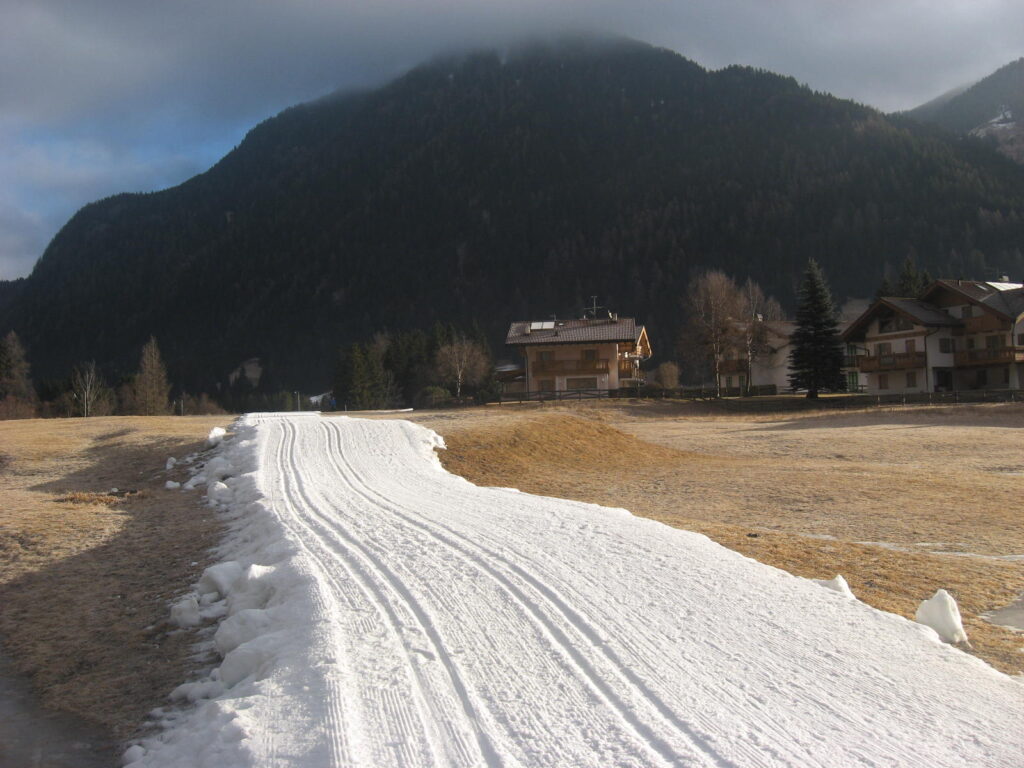
The Marcialonga has been cancelled only three times so far, most recently in 1990! Looking at the valley where the race takes place, where dandelions can bloom even in January, you wouldn’t think that it is possible.
The race was founded in 1971 by four enthusiasts who expected around 100 participants. More than 1,000 showed up. That’s probably where the massive interest in this race comes from. For the first six editions, women were not allowed to race, yet many wanted to participate so badly that they dressed as men and even painted mustaches on. In 1977, several women were disqualified at the finish with the note “Marcialonga is not for women.” A year later, women were finally allowed to register officially.
In recent years, the combined limit for the short and long courses has been 7,500 participants. Squeezing that many people into the narrow streets of the villages in Val di Fiemme is not easy, and course capacity may be the only real downside of the entire event. But this mainly affects the second half of the start field. Those at the front often have it almost too easy.
Snow reliability
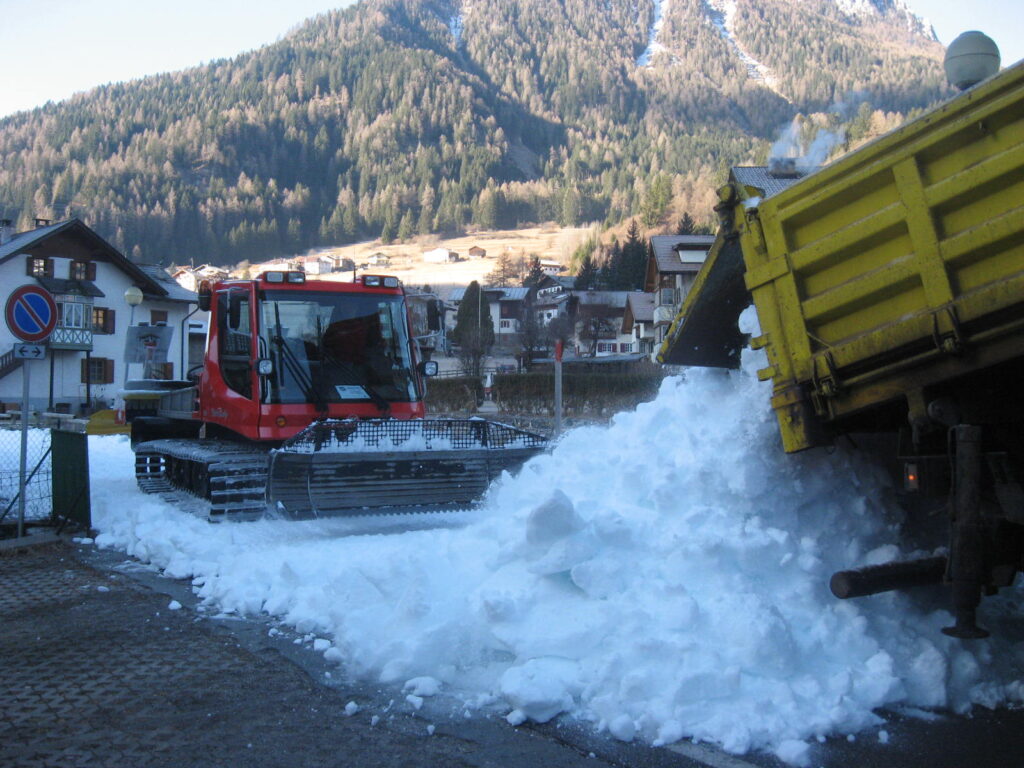
So how do the Italians manage it, with the race cancelled only three times, even though the course runs through a wide valley where the surrounding hills swallow most snow showers? From the very beginning, they haven’t relied on nature. They literally create mountains of artificial snow. From the first November frosts, intensive snowmaking takes place at many points along the course. The snow is piled up and then gradually spread onto the track. Around Christmas, it certainly helps tourism, but about a month before the race, the route is already beginning to take shape. The final coverage of village streets and the lower parts of the course, however, happens only in the last days and hours before the event.
Thanks to the deep valley, the likelihood of nighttime frost is high, allowing a solid snow base to form. Only in recent years, due to warm weather, has the race had to be shortened a few times. Even so, compared to the 4 kilometers of trucked-in snow at Jizerská50, the Italians manage to prepare at least 50 kilometers of top-quality snow. I admit they have an easier starting position. The artificial snow, with its bluish, glacier-like color, is spread in two to three tracks along the entire course. It usually freezes so hard you could almost skate on it. And where it doesn’t freeze in time, the Italians use salt. Then it’s finally time to attack the course records.
My experience
I’ve raced Marcialonga almost ten times, and the weather has always been nearly identical. At 8 a.m., it’s well below zero at the start, often around -10°C. Only at the highest peaks of the Dolomites can you see the first rays of sunlight. Gradually, the sun floods the entire valley, and by around ten o’clock, it’s usually close to zero. The final kilometers could almost be skied in a swimsuit, the snow is generally softer, the sun beats down on it, there’s a bit of water in the tracks, and meadows are blooming around you.
The course is attractive for both spectators and racers. You’ll usually experience the start in Moena, a village with a large parking area and a football stadium, from where the 7,500 racers head out onto the course. Only the first 400 start with skis already on their feet; for everyone else, it’s more of a struggle, as they have to run out of the start pens (a friend of mine fondly calls them “cattle pens”) and put on their skis only just before the start line.
The first 18 kilometers head uphill. Don’t expect long, gradual climbs. These are relatively short, steep pitches, alternating with brief descents. Right after the start, the course narrows to four tracks, and at the second kilometer, there’s even a narrow passage through a street in Moena. Be especially careful with your poles there. After that, the field begins to stretch out, and up to Canazei, those short climbs keep coming.
The atmosphere hits you for the first time right at the start. Italians know how to work a microphone. The second time, you’ll feel like Contador on the Giro, climbing toward Vigo di Fassa. A corridor of spectators with cowbells will not let you stop, even on the steepest climb. Reaching the course’s high point in Canazei is another experience. The entire town lines the streets where the race track is laid out.
The highest point and the way back
From the starting altitude of around 1,200 meters above sea level, you climb to about 1,400. The race turns right and begins a gentle descent. Don’t expect to rest, quickly down a gel and latch onto the fastest train you can. The descent back to Moena also demands concentration. Often, you need to push correctly and anticipate when three tracks suddenly become two. It never felt dangerous to me, though. Definitely don’t expect a long tuck position.
Your heart rate spikes again just above Moena. There’s a narrow climb of about 300 meters, and once more, spectators push you toward the top. Below Moena, the course flattens unpleasantly. This section is probably my least favorite. The track often runs right next to the road and slows down as the sun sets. There are fewer places to take nutrition from your own supplies, and it feels like you didn’t manage to recover at all during the previous descent.
The real work begins only after the finish of the short course, in the town of Predazzo. In recent years, the route has gone right down the main street, and you can hear the brass band from afar. You can’t help but show yourself there. Predazzo really defines Marcialonga. Fans shout at you from open windows, the local announcer drives you forward, and snow is piled even into an old fire station that you ski through. Spectators have official start lists, so it’s not unusual to hear cheers like “Repubblica Ceca” or “vai Tomas, vai, vai.” In fact, “vai,” loosely translated as “go,” is something you’ll hear so often along the course that it helps more than a PowerBar gel.
The crisis
Back on the course. From the 50th kilometer onward, it really starts to hurt. The valley opens up, and apart from the white strip under your skis, you won’t see any snow. You’ll smell flowers and cows, and yet the finish is still far away. The course mostly flattens out, and that’s when the real grind begins. It’s only rarely broken up by a longer climb, meaning about 100 meters.
The passage through the Lago di Tesero stadium is beautiful. The Cross-Country Skiing World Championships have been held there three times. The endless finishing straight with the camel hump brings back TV images. There aren’t that many spectators, but the experience is worth it. Then the snow track entirely coincides with the course used for the final stage of the Tour de Ski. Fortunately, you peel off just before the climb up the ski slope and continue gently downhill. How much downhill that was becomes clear in Molina, the lowest point of the Marcialonga course. At around 800 meters above sea level, there’s the final refreshment station, and from there on, it’s definitely not free anymore. After all, the finish is almost 200 vertical meters above you!
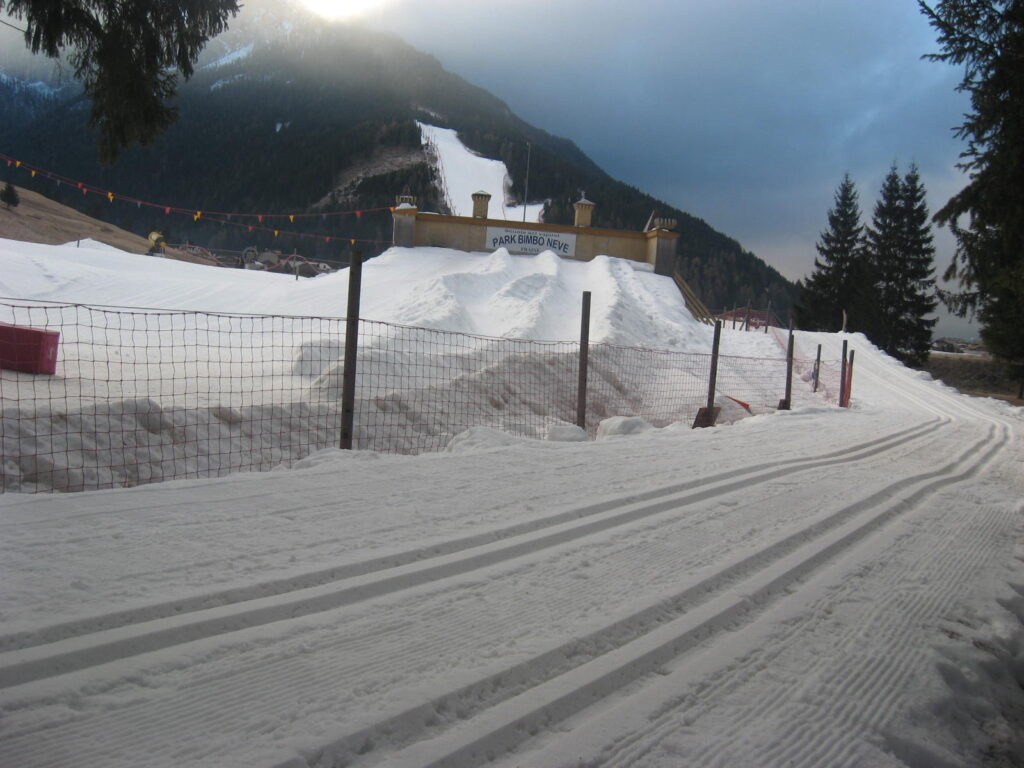
At first, you climb only gently along the stream, repeatedly passing under the road through narrow underpasses and crossing water over bridges. The narrowest passage, where you even have to crouch, comes just before the final three-kilometer climb. Right after it, you can choose whether to stop and have klister applied with a paint roller, or, like a tough guy, head straight into the Cascata switchbacks and really stretch your arms and lungs one last time.
The final Cascata
The final kilometers resemble the Tour de France. Snow is laid onto an old serpentine road, with spectators lining both sides. In the turns, it’s marked where skating is allowed, but the flats hurt absolutely everyone. This finish defines the entire race. You battle rivals for every meter and pray you won’t be caught by those who stopped for extra waxing. You squeeze out every last bit of yourself. But it’s still not enough. The final hundreds of meters are run through the narrow streets of Cavalese, where even the elite start herringboning. As soon as it flattens out, accelerate. Along the final grandstands, to the applause of the crowd, you reach the longed-for finish. Here, everyone deserves their finisher’s medal.
And that’s it. Sunshine again, coffee, pasta party, and Italian relaxation with views of the surrounding snow-covered hills. After Marcialonga, very few people are in a bad mood. Logistics work (it’s only 25 km back to the start parking), post-race catering is sufficient, and results are available immediately. What more could a ski racer ask for?
This article was published on Bezky.net in 2017.
Subscribe to our newsletter
Most read
-
04.01.2022
-
18.03.2025
-
10.12.2025
-
19.03.2025
-
04.01.2026



More Articles
-
Goms World Cup 2025/2026: Results for the women’s sprint qualifier
Linn Svahn (SWE) posted the fastest time in the sprint qualifier at the World Cup sprint in Goms, Switzerland. Here are the full results from the women’s sprint qualifier in classic technique.24.01.2026