“I can really wear myself out there”: Tereza Voborníková reveals what she changed in her preparation
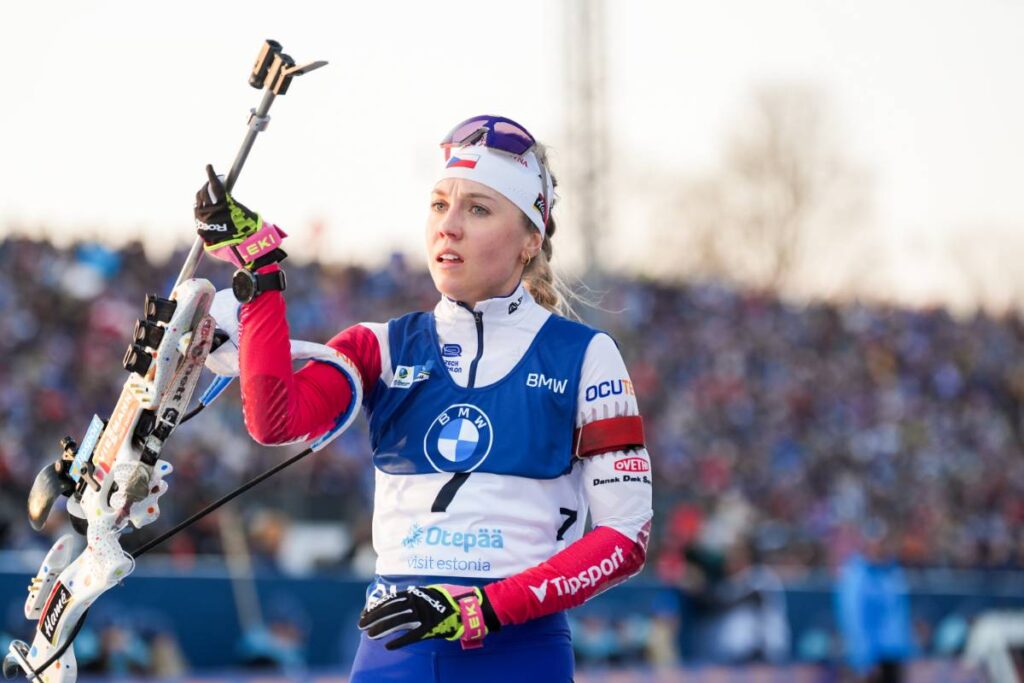
Fifteen days remain until the start of the new World Cup season. Czech biathlete Tereza Voborníková heads to Kontiolahti in Finland, where the season begins on November 26, with a new rifle stock, a solid base from summer training and technique insights from a Norwegian coach.
Summer training is over, and for the last phase of preparation before the new season, the biathletes have moved to a final training camp in Vuokatti, Finland. Without doubt, one of the biggest Czech hopes will be Tereza Voborníková, who won a bronze medal in the mass start at this year’s Winter Olympics.
Every season, Tereza moves closer to the world’s elite. Still, she does not rest on her laurels and makes small changes to her preparation. Another important milestone was finishing her master’s degree, so the Czech biathlete can now focus fully on biathlon.
Also Read – Biathlon, exams, and plans: Voborníková on training and graduation
New stock and extreme heart rates on the treadmill
The most visible change is a rifle stock from a Slovak manufacturer, which Voborníková got used to all summer. It is made of wood reinforced with carbon, which makes it stronger and more durable. Even though 3D-printed components are becoming more common in biathlon, she says quality wood remains the foundation.
A treadmill that she and her partner (editor’s note: national team teammate Mikuláš Karlík) bought for their home has also been a big help.
“I found out that when running on a treadmill or on a roller ski treadmill, I can reach completely crazy heart rates, unlike in the road. So I also include treadmill sessions in my training. For one thing, my lactate gets extremely high, which doesn’t happen to me very often, and I can also really wear myself out in terms of heart rate. If I made any smaller change in training, it was this,” she says.
She does control tests on the roller ski treadmill in Jablonec almost every month.
Technique and shooting
In its preparation, the Czech team relies on Norwegian methods and technique experts, among other things. The cooperation has brought detailed analysis and clear feedback into training.
“Before, it was just ‘shift your weight over,’ but the Norwegian coach explains instead: ‘If you turn your foot a little, this happens.’ When he isn’t with us in person, he sends us three-minute analysis videos where he adds arrows and comments on the details,” says Voborníková. Paradoxically, she finds it easier to improve her technique at fast race pace than when skiing slowly.
Shooting is also a key part of her preparation. Her yearly volume is around 20,000 rounds. However, the extreme double shooting sessions from her junior years have been replaced more by quality and fine-tuning details on the range.
The story continues below.
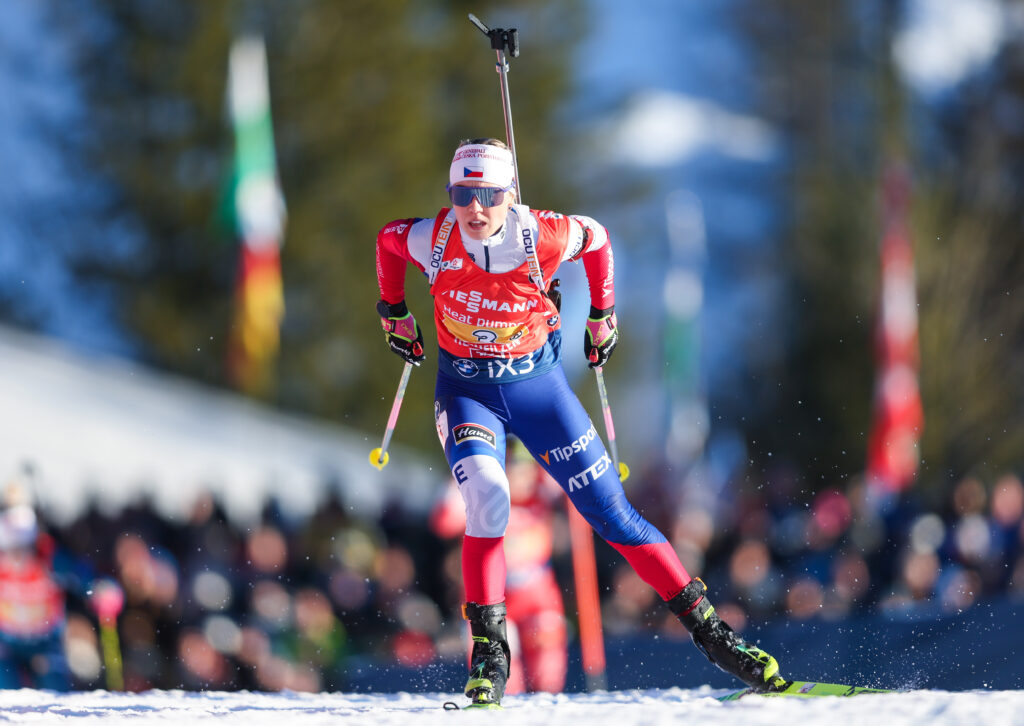
The biggest luxury? Good sleep
The start of the season also means life in hotels. While Voborníková can push through physical pain on the course, the biggest challenge during long stretches on the road is simply getting rest. She is an extremely light sleeper, and almost anything wakes her up.
“For me, sleep is the most valuable thing I have. I’ll gladly buy a much more expensive plane ticket just so I don’t disrupt my sleep routine. Most people lie down and are asleep within a minute, but for me, noise or an unfamiliar environment is a huge problem,” she explains.
Tennis for variety
While she knows how to deal with failure in biathlon, in her private life she has found a new challenge that can really test her. Starting tennis at 25 brings Tereza moments of pure frustration.
“As a competitive person, you want to be perfect at everything, but then it’s hard to accept that I won’t become the next Serena Williams,” she laughs, and continues: “It doesn’t happen to me in biathlon, but in tennis there’s no quick positive feedback. You feel like you’re putting in enough, and it doesn’t pay off. I’ve already said I’m quitting tennis, but I was told that nobody is any good for the first three years. So I still have a year.”
In biathlon, the Czech athlete keeps working not only on her physical but also on her mental side, and she takes setbacks with more perspective: “If we were all mentally made of steel and unbeatable, there would be no humanity in it. It’s an endless source of things that can always be improved.”
15 days to Kontiolahti
Races will now put the summer work to the test. The season begins in Kontiolahti, Finland, before the series moves to Hochfilzen, Austria (December 1–6), and Annecy-Le Grand-Bornand, France (December 8–13). The home World Cup in Nové Město na Moravě is scheduled for January 19–24, 2027, and the highlight of the winter will be the World Championships in Otepää, Estonia, in February.
Read More – Biathlon World Cup: Calendar for the 2026/2027 winter season
Additional information about the Biathlon World Cup can be found HERE
Are you interested in biathlon? Click HERE and read more about it.
Subscribe to our newsletter
Most read
-
07.10.2026
-
09.11.2026
-
06.10.2026
-
04.11.2026
-
30.09.2025

More Articles
-
Where to watch the 2026/2027 winter season: cross-country skiing, biathlon and the World Championships
The 2026/2027 winter season brings a full calendar for cross-country skiing and biathlon fans. Between the FIS Cross-Country World Cup, the IBU Biathlon World Cup and two World Championships, there will be racing nearly every weekend from November to March.08.11.2026