Gets the best advice at home – in two countries
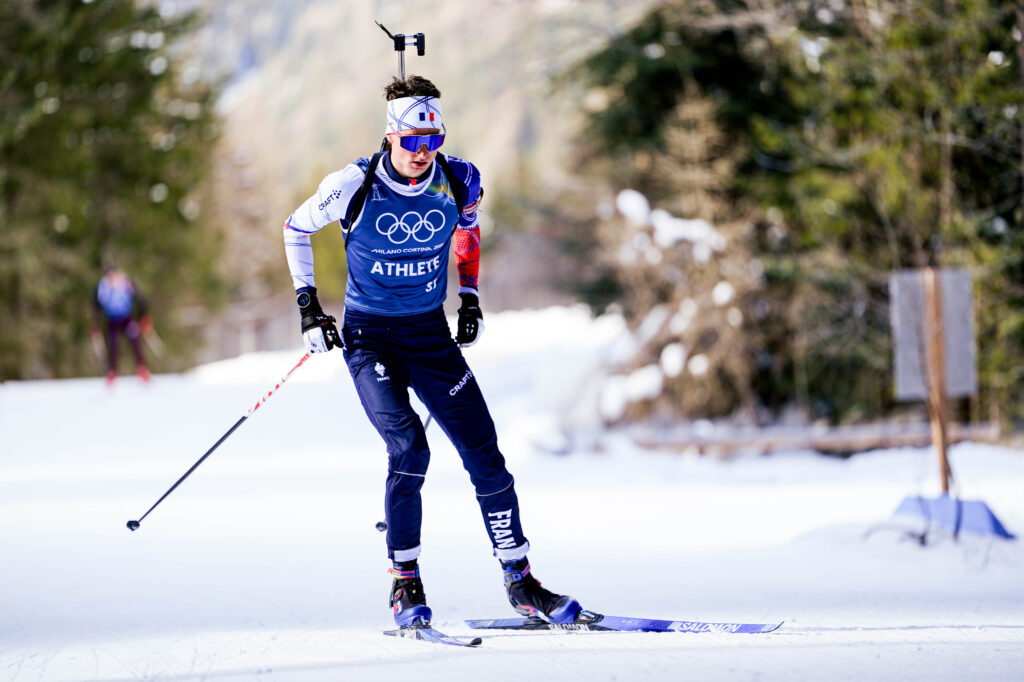
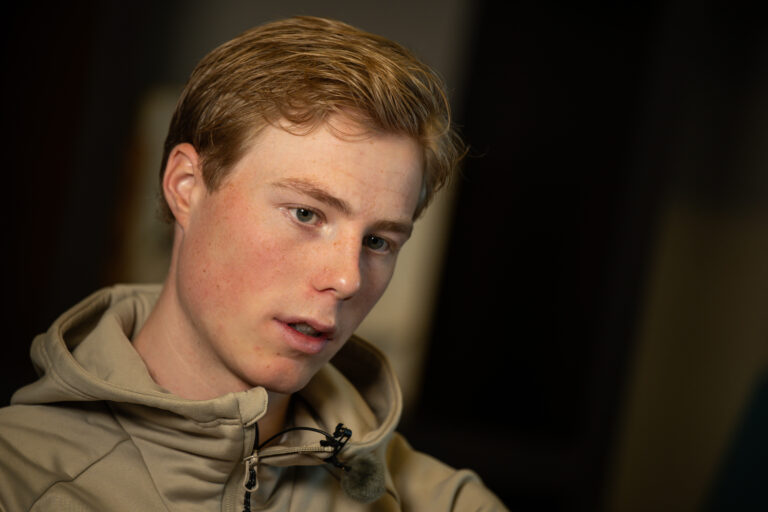
His father competed for France at the Olympics. His mother became a Junior World Champion for Norway. The 24-year-old who leads the biathlon World Cup doesn’t need to leave the house to get the best advice on what it takes to become the best. And he’s already there.
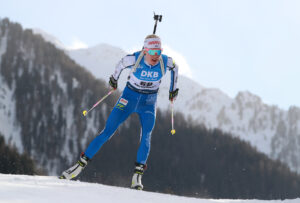
Leading the World Cup and ready to collect his first Olympic medals. Eric Perrot has always dreamed big. He wanted to become the best in the world. It turned out that biathlon was only natural, with two parents who both reached the top of their careers.
And that he ended up competing for France instead of Norway was never really in doubt.
“No, I’ve lived in France my whole life, so it was natural.”
But he speaks fluent Norwegian. As a child, he also lived in Ålgård, Rogaland, and competed for Figgjo, among others, alongside Martin Nevland, who is now part of the Norwegian national team.
His mother, Tone Marit Oftedal, is the sister of Kjell Ove Oftedal, the former Norwegian national team coach. His father, Franck Perrot, competed for France at the Olympics.
The family lives in the Savoie region, where Eric Perrot grew up in a mountain environment where sport, endurance, and competition were a natural part of everyday life. As a French-Norwegian, with his childhood spent in Savoie, he developed a strong connection to nature and outdoor life early on.
Eric has a great passion for outdoor sports and does not limit himself to biathlon alone. He also runs, cycles, and paraglides, constantly seeking new challenges and experiences.
His career path has been shaped by many years of focused preparation and intensive training, reflecting a complete and dedicated athlete.
Always Dreamed Big
He has always loved dreaming big. Eric Perrot earned a spot on the French Olympic team for Beijing four years ago, but at the time, he had to watch his teammates compete.
Now he is their strongest card on the men’s side and is chasing the medals he has always dreamed of.
His sporting career actually began with cross-country skiing, but a switch to biathlon felt natural.
“I could choose what I wanted to do, and I wanted to do biathlon, so my parents supported me. That’s why I’m here today – not because they pushed me,” he says.
“I take in all the advice my parents give me because I believe it can be a good way of doing things. But I also like to do things my own way. I like to follow my feelings and what feels best for me. I listen a lot, and then I try to find my own path afterward.”
Growing up, he looked up to both French and Norwegian stars.
“They were all role models for me. Raphaël Poirée, Ole Einar Bjørndalen, Martin Fourcade, Johannes Thingnes Bø. It was fun to compete against Johannes, whom I watched on TV when I was younger. I remember my first World Cup race when I saw him start and knew I would be competing against him. That was a cool experience.”
Reigning World Champion
Already at the age of 23, Eric Perrot won his first individual World Championship gold last season. He struck gold in the 20km in Lenzerheide, and perhaps the longest distance will also suit him best at this year’s Olympics.
Perrot shoots both quickly and accurately, and when he is in top form, it is very difficult to take time on him out on the course. So far, that has given him seven individual World Cup victories, and he now leads the overall standings, 37 points ahead of Italy’s Tommaso Giacomel.
Statistics show that his best results have come in pursuit and mass start events, even though his World Championship gold came in the individual 20 km. It also shows that Eric Perrot is cool under pressure and does not lose his composure when facing head-to-head competition.
The calm and silence of his home region, Peisey-Vallandry, have helped shape his composed nature. Here, in the heart of the Tarentaise Valley, he developed his style, learned patience and concentration, and discovered the joy of first regional and then national victories. The club became his second family, and the mountains his school of life. At home, he relaxed with music and chess.
Since becoming Junior World Champion in the mixed relay in 2021, he has not looked back. The World Championship gold from 2025 is the highlight so far – but it may soon be surpassed because the French-Norwegian from the Alps will be difficult to beat on the Olympic tracks in Anterselva.
Biathlon schedule – Milano-Cortina 2026
Sunday, February 8: Mixed Relay (M+W) (More information can be found HERE)
- 14:05 CET: Mixed Relay, Men + Women
Tuesday, February 10: Men 20km Individual (More information can be found HERE)
- 13:30 CET: 20km Individual, Men
Wednesday, February 11: Women 15km Individual (More information can be found HERE)
- 14:15 CET: 15km Individual, Women
Friday, February 13: Men 10km Sprint (More information can be found HERE)
- 14:00 CET: 10km Sprint, Men
Saturday, February 14: Women 7.5km Sprint (More information can be found HERE)
- 14:45 CET: 7.5km Sprint, Women
Sunday, February 15: Men 12.5km Pursuit and Women 10km Pursuit (More information can be found HERE)
- 11:15 CET: 12.5km Pursuit, Men
- 14:45 CET: 10km Pursuit, Women
Tuesday, February 17: Men 4×7.5km Relay (More information can be found HERE)
- 14:30 CET: 4×7.5km Relay, Men
Wednesday, February 18: Women 4x6km Relay (More information can be found HERE)
- 14:45 CET: 4x6km Relay, Women
Friday, February 20: Men 15km Mass Start (More information can be found HERE)
- 14:15 CET: 15km Mass Start, Men
Saturday, February 21: Women 12.5km Mass Start (More information can be found HERE)
- 14:15 CET: 12.5km Mass Start, Women
Complete program for the Winter Olympic Games can be found HERE
Antholz-Anterselva promises breathtaking courses for athletes and spectacular viewing for fans. With every shot and ski stride counting, the biathletes will aim for the podium in every race, making the biathlon one of the most eagerly watched events of the 2026 Winter Games.
Are you interested in biathlon? Click HERE and read more about it.
Subscribe to our newsletter
Most read
-
16.02.2026
-
19.02.2026
-
11.02.2026
-
08.02.2026
-
15.06.2026


More Articles
-
Hedegart: “It will be greater than Olympic golds”
Just three months after returning to biathlon, Einar Hedegart has set a goal he believes will surpass the two Olympic golds he won last winter.27.07.2026