Stars flock to successful coach but must stay silent about his methods
VO2 uptake rising by 10 percent and results improving quickly after a short time. But the athletes must sign a non-disclosure agreement about the methods behind the progress. Now the coach speaks for himself.
Vetle Leander Johansen’s athlete list is packed. Over the past couple of years, stars from Norway and abroad have lined up to work with the 25-year-old Norwegian from Vantix Performance.
Several report remarkable progress after only a short time with Johansen: VO2 uptake rising by 10 percent and big jumps in the results lists.
Among those who have joined Johansen are Swedish sprint star Oskar Svensson and super veteran Calle Halfvarsson. He also works with French prospect Sabin Coupat, Norway’s reigning junior world champion Julie Sand-Hanssen, Team Bygdø and the entire private team Swenor-Splitkon, as well as a number of other Norwegian talents and well-known athletes.
When Halfvarsson signed with the private team Swenor-Splitkon in May, he was clear about his expectations.
“It will be d..n interesting to test his training philosophy.”
Also Read: Requires 40 hours a week – the training that awaits Halfvarsson
Must sign a non-disclosure agreement
According to the coach, Halfvarsson has also made big progress since joining the team. The goal is World Championship gold in Falun this winter.
But when he and other athletes are asked what they do differently after joining Johansen’s program, they go quiet.
“I can’t tell you that. I have actually signed a non-disclosure agreement, which means I can’t say what we do in training. It’s not rocket science, but it’s enough that we shouldn’t make it public. That’s understandable when they do their thing. They want to keep it within the team,” the 37-year-old says in a podcast with Aftonbladet.
Now the coach speaks for himself.
Story continues below.

40 hours a week and much harder training
Speaking to Langrenn.com, Johansen lifts the veil. He believes Halfvarsson is a great talent who has not yet been rewarded for the work he has put in.
How will you take a 37-year-old with 20 years of wrong training to World Championship gold?
“I don’t care what he has done before. He will do the same as the others do and have done. In short: we will train ‘rock hard’,” says Johansen.
Shaking up established models
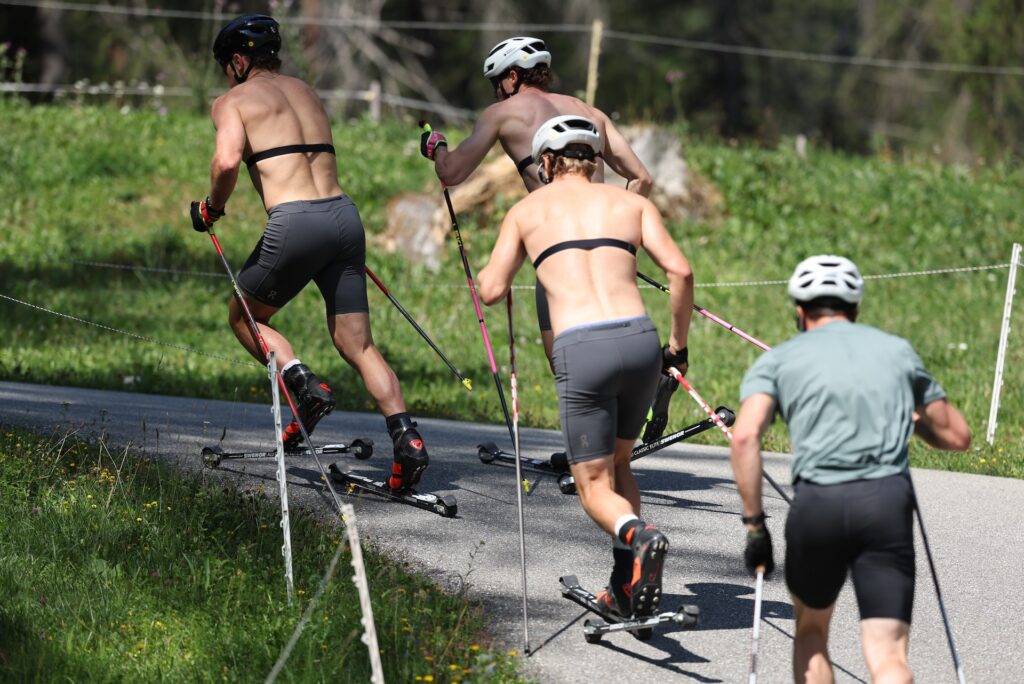
Johansen’s definition of “rock hard” means weeks with more than 40 hours of training, and many more hard sessions than have been common in traditional cross-country training.
“Put simply, you need to put in a lot of hours to become good; you need to sleep enough and eat well. Everyone agrees on that. But the key is to find out how to get the most out of the hours you put in. Then the training must be individually adapted, and you cannot let established truths set the limits,” Johansen tells Langrenn.com.
What he calls “established truths” is traditional cross-country training based on the Norwegian model. He has shaken it up considerably.
What is the philosophy behind your approach, and your reason for doing what you do?
“I have long been fascinated by what the triathlon community does and how they train. In general, they train much more than in cross-country skiing. Even though they are different sports, both are endurance sports. So I find it interesting that, for example, it is perfectly normal for age-group triathletes to train 1,100 hours or more a year, while the Norwegian Ski Federation’s development plan says junior cross-country skiers should only train 600 to 700 hours a year,” says Johnsen, and asks rhetorically:
“What is it physically that means cross-country skiers cannot train as much? Is it perhaps that people don’t dare to challenge the established way?”
He answers his own questions like this.
“There is little that prevents a cross-country skier from training with the same professionalism as in other sports. It is natural that most people stick to established methods, as long as the best Norwegian skiers keep delivering international results one after another,” says Johansen, and explains further.
“On an individual basis, however, the question is different. If you want to become as good as, or better than, those on the national team, for most people it will not be enough to do the same. My goal is to help each individual get the most out of their abilities, and of course there is a difference between developing juniors and seniors who are going all in to reach the level of the best.”
“Typically we do three days of training and one day of rest. We often have two hard sessions on the first day, then as much volume as possible with six to seven hours of training on day two, and then two hard sessions on the last day before the rest day, and then three new days of training,” says Johnsen.
Interested in training and training trends? Here we have collected content on training, training methods, research and development.
Subscribe to our newsletter
Most read
-
14.10.2026
-
-
22.10.2026
-
28.10.2026
-
29.10.2026




More Articles
-
Pohti SkiTeam Pyhäjärvi claim first Finnish Cup relay victories of the season
The Finnish cross-country skiing season continued this Sunday in Vuokatti with the first relays of the 2026/2027 Finnish Cup.01.11.2026