A new era for biathlon: Record numbers, new rules and sponsors, less pressure on young athletes
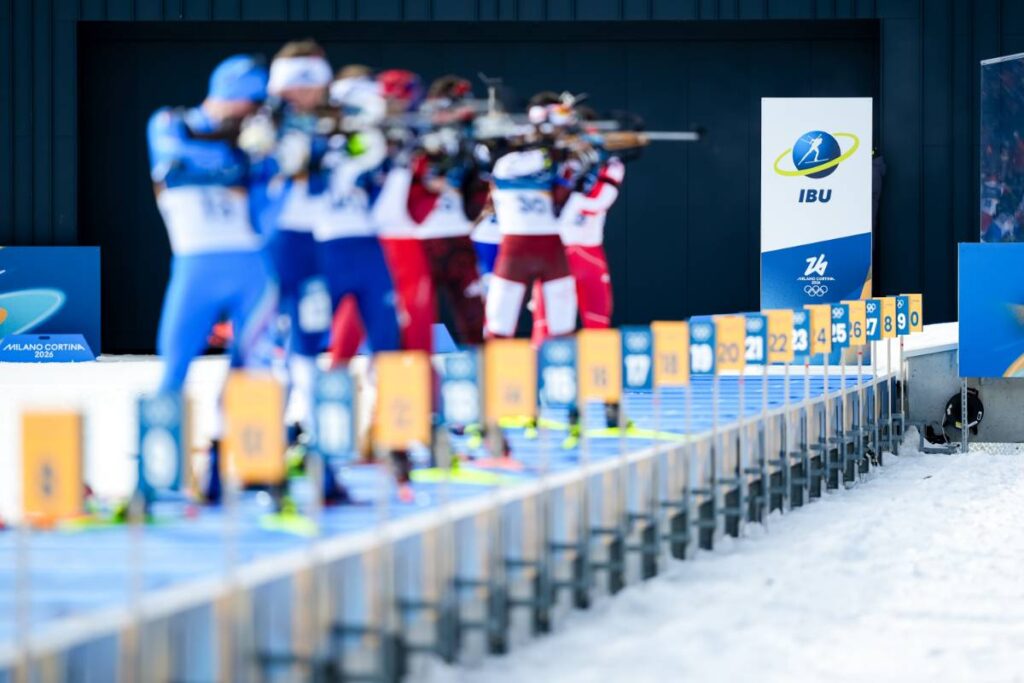
Record Olympic viewing figures, a TV deal running until 2034, and a twelfth medal event on the Olympic programme. The International Biathlon Union (IBU) heads into the 2026/2027 season under new leadership and is determined to ride the Olympic wave.
At the Forum Nordicum media gathering in Nové Město na Moravě, IBU Communications Director Christian Winkler spoke about biathlon’s successful showing at the Winter Olympics and the changes coming next season.
New leadership
The electoral congress in September brought a change at the top of the Biathlon Union. Slovenia’s Tim Farčnik, the sole candidate for president, succeeded Sweden’s Olle Dahlin. Dahlin stepped down after two four-year terms, and the congress immediately named him the first honorary president in IBU history.
“If you remember where the IBU was eight years ago, especially in terms of governance, and where it is today, it’s a remarkable legacy,” Winkler said of the Dahlin era.
Vice-president Jiří Hamza also left the leadership after choosing not to run again. His place has been taken by a new female vice-president. The Executive Board still includes former Italian biathlete Nathalie Santer and the re-elected Norwegian Tore Bøygard, among others. Newcomer Stefan Schwarzbach, marketing chief of the German Ski Association, joins the board, while Simon Eder represents the athletes.
The congress also awarded the 2031 World Championships. In a very close vote, Sweden’s Östersund beat Finland’s Kontiolahti. Before that, biathletes face this season’s championships in Otepää, Estonia, and the 2030 Olympic Games in the French Alps.
Also Read: Farcnik elected new IBU president as biathlon’s leadership changes hands
Broadcasting rights and sponsors
The biggest institutional news is a four-year extension of the contract with the European Broadcasting Union (EBU), now running until 2034. The original deal was valid until 2030. The EBU holds exclusive media rights, meaning the World Cup and World Championships will remain on public broadcasters. The EBU will also continue as host broadcaster, producing the races itself.
The IBU has not disclosed exactly how much the EBU will pay, but the EBU’s head of winter sports has publicly mentioned a nine-figure sum over four years. “The value of this contract is huge. It guarantees our sport financial stability for the next decade,” Winkler stressed.
Progress is also being made on the sponsorship front. From this season, LAVITA is the title partner of the World Cup and World Championships, with the competition to be called the LAVITA World Cup Biathlon. Swedish heat pump manufacturer NIBE and Germany’s Continental have become premium partners, while Bavarian brewery Benediktiner has joined as a main partner.
NIBE holds particular significance for the IBU. “Until now we’ve been very German-oriented in this respect. Now NIBE from Sweden is joining us as a premium sponsor,” Winkler explained.
One more change was visible on Winkler himself: Adidas clothing. The German brand returns as official apparel supplier for IBU staff and officials. It was already a partner until 2018, after which the federation was outfitted by Czech brand Alpine Pro.
A record-breaking Olympics
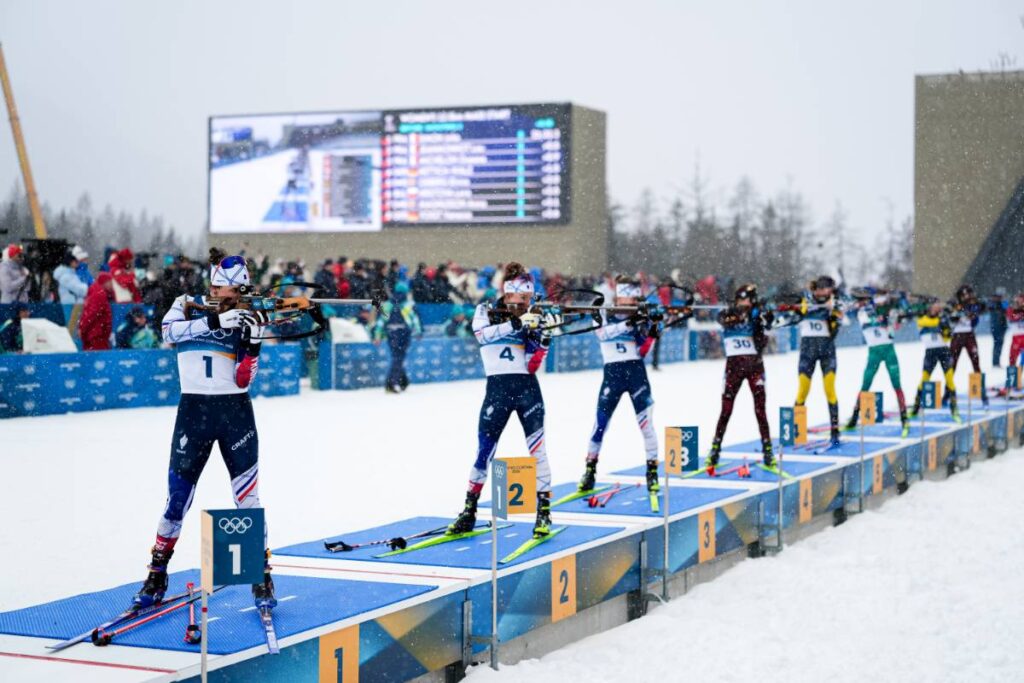
Winkler sees the International Olympic Committee’s summer decision to add the single mixed relay to the 2030 programme as a reward for biathlon’s popularity in Milano and Cortina. Biathlon will thus have twelve medal events in the French Alps. “We’d been trying for some time, and now it has worked out,” he noted.
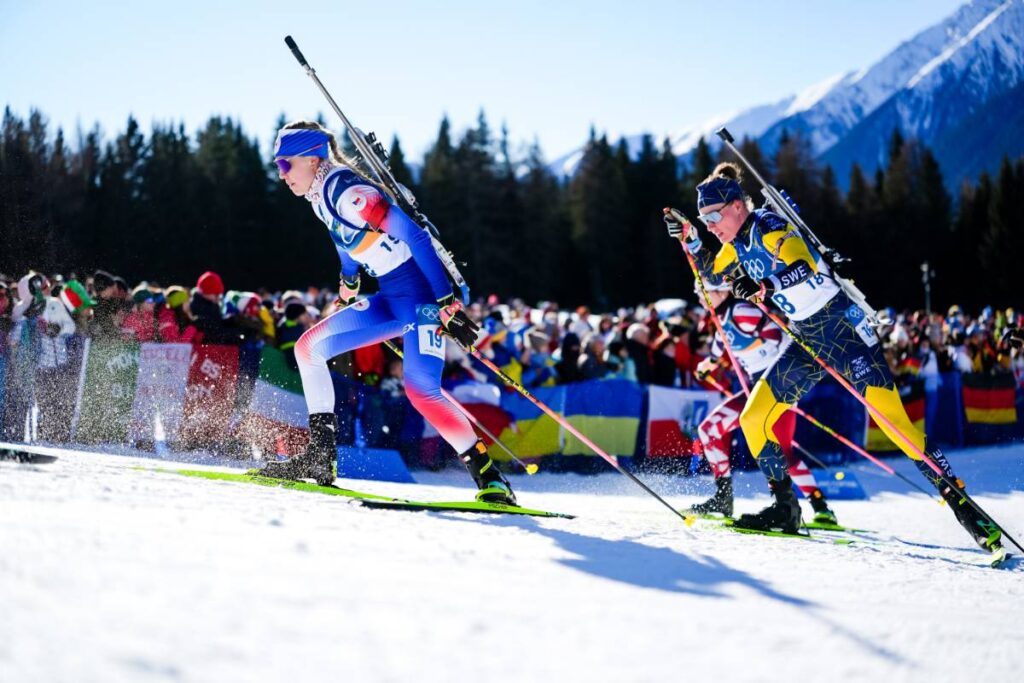
The figures from the Games in Antholz back him up. Hours watched rose by up to 40 percent compared with Beijing. In Italy and the Czech Republic, the Olympic races drew the highest biathlon audiences in history. In France and Germany, market share approached 50 percent, and ZDF in Germany peaked at 6.6 million viewers. Norway’s NRK reported a 90 percent share for some races.
It was a similar story online. For the first time, the IOC collected social media data from all winter federations, and biathlon emerged as the most engaging sport of the Games, ahead of figure skating. “Biathlon was number one in fan engagement. And for a sport as small as biathlon compared with some others, that’s a really big achievement,” Winkler said.
IBU channels generated 15 million interactions during the Games, with the average post reaching more than 300,000 users. The app and website recorded 36 million views. Depending on the metric, numbers grew by up to 900 percent compared with Beijing.
Where the fans come from is also revealing. Germany remains the most important market in absolute TV figures, but French fans have already overtaken it in some digital metrics. Italy, Sweden and the Czech Republic follow.
Calendar changes
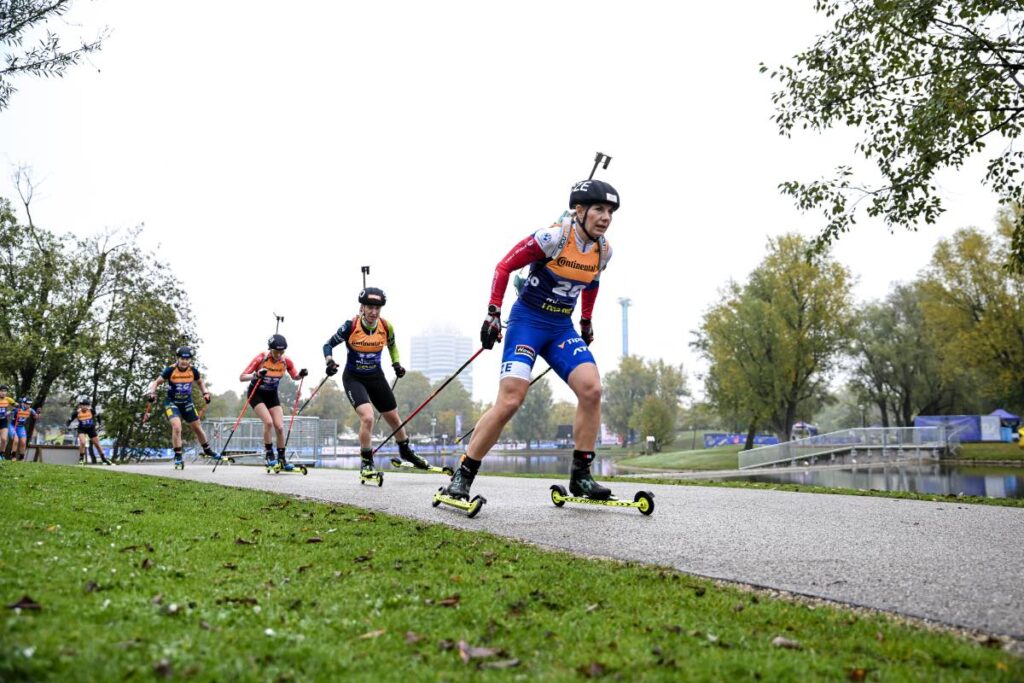
For the second time, the IBU season kicked off with the urban LOOP ONE Festival in Munich’s Olympic Park. “We certainly don’t want to replace winter biathlon with it. But we felt we needed to start the season with something other than just a race that begins in November in the Scandinavian darkness,” Winkler explained.
Nine Olympic champions from Milano and Cortina competed, and Olympic champions won every race. Some 25,000 people visited the venue over the weekend, with almost 8,000 tickets sold for the stadium stand. Visitors could try laser rifle shooting under the guidance of legends such as Johannes Thingnes Bø. The third edition is planned for mid-October 2027.
The World Cup calendar itself will see a visible change. A regular stage with four races will now be held straight after New Year, on 2–3 January. The opening week in Kontiolahti, by contrast, is shortened to a standard Thursday-to-Sunday stage. Due to snow problems around Christmas, Oberhof moves from January to March, after the World Championships.
The total number of races remains unchanged, as does the two-week Christmas break the athletes wanted. The highlight of the season will be the World Championships in Otepää. Pokljuka hosts the Open European Championships at the end of January, and Poland’s Jakuszyce stages the Junior World Championships at the end of February.
Read More – Biathlon World Cup: Calendar for the 2026/2027 winter season
Rule changes
Changes are also coming on the course and the range. Qualification for the mass start will now go to the top 20 in the overall standings plus the ten best point scorers from the given stage, instead of the previous 25 plus five. The change was pushed through by the Athletes’ Committee to reward those in form.
Rifle safety rules are stricter. Athletes may only take the rifle off their back at the shooting point, and it must be back on both shoulders when they leave, or they face disqualification. Three athletes, including Lucie Charvátová, were already disqualified this way at the festival in Munich. “It’s taken seriously, and the athletes of course have to get used to it in their routine,” Winkler warned.
On the other hand, penalties for procedural errors, such as a missing sticker on the rifle, firing an extra round, or a forgotten safety flag, will be milder. Instead of disqualification, a time penalty will be applied.
Less pressure on young athletes
The IBU is changing its philosophy at youth level. At the initiative of several major national federations, it wants young athletes and their coaches to focus on development rather than chasing international medals at too young an age. The Junior Cup will therefore lose its points and crystal globes and become a series of standalone top events. IBU points for qualification to international races can now also be earned at regional competitions. The federation is also scrapping the Youth World Championships, while the Junior World Championships remain.
A project close to the federation’s heart is Biathlon for All, which teaches children to shoot with laser and optical rifles. Almost 50 national federations are involved, staging around 600 events a year, and the IBU has invested more than two million euros. For the next two years, the European Union will contribute through its Erasmus+ programme. This summer, Winkler tried organising an event himself for the first time in his own village. “It’s really simple,” he assured.
Para biathlon
Para biathlon, which the IBU took over several years ago, is also growing. The winter features three World Cups in Vuokatti, Martell in Italy and Torsby in Sweden, plus the World Championships in Pokljuka in February. New this season is a mass start in which each athlete’s impairment is factored in at the start. “Once everyone is on the course, it’s an open race and whoever crosses the finish line first really is the winner,” Winkler described. Para biathletes will also contest the single mixed relay for the first time.
Additional information about the Biathlon World Cup can be found HERE
Are you interested in biathlon? Click HERE and read more about it.
Subscribe to our newsletter
Most read
-
07.10.2026
-
27.09.2026
-
06.10.2026
-
30.09.2025
-
13.01.2026

More Articles
-
The Big Ski Test 2026: Mid-range skate skis
This year's big ski test is divided into four parts: skin skis, double poling skis, mid-range skate skis and an updated pole test.29.10.2026

-
-
-
-
28.10.2026