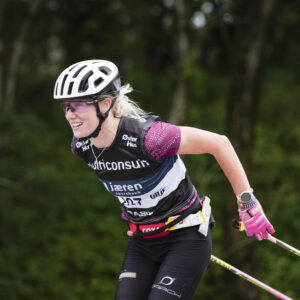
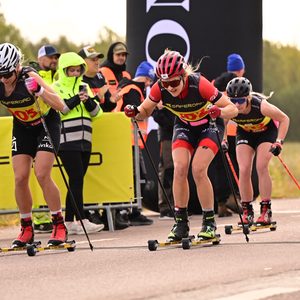
Lauri Mannila found a new direction: “It feels like my body is responding to training again”

Lauri Mannila’s move to long-distance racing brought a new direction to his career – and an immediate reward with bronze at the Nationals in Inari. He explains how the change reignited his motivation and what opportunities Ski Classics offers for Finnish skiers.
Lauri Mannila capped his season with a strong performance, taking bronze in the 50-kilometer race at the Finnish Championships in Inari. The medal meant more than just a result – it was the perfect ending to a season that brought consistency, learning, and confirmation that his new career path is the right one.
The race in Inari offered exactly the kind of conditions where Mannila’s strengths came into play. A demanding course and tricky waxing conditions favored a skier who can rely on upper body strength. The long races throughout the season and a well-tested fueling strategy were clearly visible in his performance.
“It was a great decision for the season. I feel like I didn’t quite get a perfect performance during the Ski Classics season… so it felt really good to succeed in the final race.”
He found the race tough, but well suited to him – and knew exactly how to manage his energy.
“The race was really tough because of the course and conditions, but I think it suited me well. I was able to use my upper body effectively when the grip started to wear off. I have a good energy plan that I’ve used many times during the season, so I know what works for me.”
Mannila values his first national championship medal highly.
“I really value my first SM medal from Inari, and right now it’s definitely fresh in my mind.”
Read also: Inari crowns the season with sun, stamina and farewells
Article continues below.

Consistency was the key strength
Mannila’s season was defined by consistency. His fitness was already at a high level during the roller ski races in late summer and stayed there all the way through spring.
He emphasizes that the right training structure and staying healthy played a major role. Training volume remained high throughout the season, and the frequent long races also helped maintain his condition.
“I feel like I was already in really good shape in late summer, and that form lasted all the way to spring. I kept my training volume relatively high throughout the race season and actually trained even more in winter than in summer.”
The rhythm of the Ski Classics calendar also helped him stay focused.
“The long races week after week helped maintain my fitness.”
New motivation from long-distance skiing
The move from sprinting to long-distance skiing marked a major turning point in Mannila’s career. Previous seasons as a sprinter had not brought the progress he was looking for, and motivation had started to fade.
“Results were stagnating or even getting worse. I felt that the situation no longer motivated me, and skiing didn’t give me any enjoyment anymore.”
The transition to long distances brought back both motivation and a sense of progress.
“After moving to long distances, I’ve found a completely new approach to training and racing. It feels like after several years my body is responding to training again, and I feel like things are moving forward.”
At the same time, his everyday life as an athlete became more structured and predictable.
“It’s also easier because I already know in spring what races I’m preparing for. As a sprinter, everything was always very uncertain… now it’s easy to stay focused on the essentials when races follow each other throughout the winter.”
A chaotic but high-level series
Ski Classics offered plenty of learning experiences during Mannila’s first season. He describes the races as unpredictable – even chaotic – but in a positive way.
“You could describe the races as positively chaotic. The race dynamics and results are often very unpredictable.”
At the same time, the level of competition is extremely high and diverse. Mannila highlights how different types of athletes can succeed.
“The level of competition is really high, and it’s great to see how different strengths can lead to success.”
According to him, courage and tactics play a key role.
“Ski Classics skiers are very brave in using their own strengths and aren’t afraid to make moves when they feel strong.”
Team tactics also add another layer to the races.
“It’s great to see how big teams use team tactics and how athletes can sacrifice for the team’s success. It’s really inspiring.”
While he doesn’t see a need for major changes, he does have a few ideas for development. He would like to see one additional very long race of 90–100 kilometers added to the calendar, as well as one more race weekend before Christmas. He also highlights how important it would be to have a Ski Classics event in Finland.
Article continues below.

Long-distance racing develops overall capacity
One noticeable trend is that Ski Classics skiers are also performing well in traditional races. According to Mannila, this is no coincidence.
“Changing training and racing long distances increases overall capacity so much that it shows in everything.”
Double poling, in particular, has become a decisive factor in modern skiing.
“Upper body capacity plays such a big role that double poling training gives a huge advantage in traditional races.”
He also points out the growing professionalism in long-distance teams.
“I think many teams have taken professionalism so far that traditional distance skiers could learn from them.”
Training together with strong athletes and focusing on nutrition are key elements.
“They train a lot together with top athletes, which pushes everyone forward. Nutrition and energy intake are also at a very high level, which allows for harder training, better recovery, and the ability to tolerate both training and racing.”
A clear shift in training
Mannila’s training has changed significantly with the transition to long distances. Double poling is now the foundation, but the overall approach remains versatile.
“My training consists largely of double poling. I do 2–3 long sessions of 4–5.5 hours every week.”
He prefers a structure where he completes one long session per day over several consecutive days. Running and cycling are also important, along with occasional classic and skating sessions.
His favorite type of workout is long and demanding, with intensity included.
“A 4–5 hour session with intensity is my favorite… for example 4×20 minutes at threshold or shorter high-intensity intervals.”
Not all training is equally enjoyable.
“I don’t really like short recovery sessions in the afternoon.”
Looking ahead, Mannila plans to continue along the same lines, while allowing more recovery after a demanding season.
“I’ll continue mostly from where I left off, but I’ll take a longer transition period now and a break from double poling so my body can recover.”
Early summer will focus on other endurance sports.
“Until early June, running and cycling will be the main forms of training.”
Roller ski racing will play a key role later in the summer, followed by altitude training blocks in the autumn.
“Roller races are great preparation… and I’ll likely do a long altitude camp in October and another before the race season starts.”
Article continues below

Eyes on the top
His first Ski Classics season gave Mannila confidence that he can compete at the highest level.
“This season showed that I’m already close to the top, so the goal is to fight for top positions in every race.”
He wants to be an active racer rather than just follow others.
“I believe my capacity is enough to even win races when everything goes perfectly.”
His long-term dream is clear.
“In the long run, the biggest dream is to win Vasaloppet.”
Life outside skiing
On the Pro Tour, Mannila’s favorite race is Jizerská50, whose profile suits him well.
“The course profile suits me… long steady climbs but still a fast race.”
Nutrition is a central part of his daily routine.
“Rice is a big part of my diet… during long sessions I consume 60–120 grams of carbohydrates per hour.”
Outside of skiing, he enjoys simple things in nature.
“Cooking and eating good food is important to me… during lighter periods I enjoy forestry work, fly fishing, and hunting.”
His role model comes from Norway.
“Petter Northug.”
A message for Finnish skiing
Mannila sees the state of long-distance skiing in Finland realistically, but with optimism.
“Finland is far behind Sweden and Norway in long-distance skiing culture.”
He emphasizes the importance of visibility and structure – but also believes in the available potential.
“I’d say even young skiers should consider long distances… Finland has athletes with the potential to reach the top with hard work.”
In the end, one thought sums up his new direction:
“I believe that skiing boldly will be rewarded sooner or later.”
Read about Lauri Mannila’s team here.
Subscribe to our newsletter
Most read
-
11.05.2026
-
23.08.2022
-
03.08.2026
-
05.08.2026
-
19.09.2026
More Articles
-
Finnish Roller Ski Championships crown their champions in Kuopio
The Finnish Roller Ski Championships ran across three days in Kuopio, from Friday, September 18 to Sunday, September 20, 2026, with titles decided in a hill climb, a freestyle sprint, and a 10km individual skate. Check out the results.22.09.2026