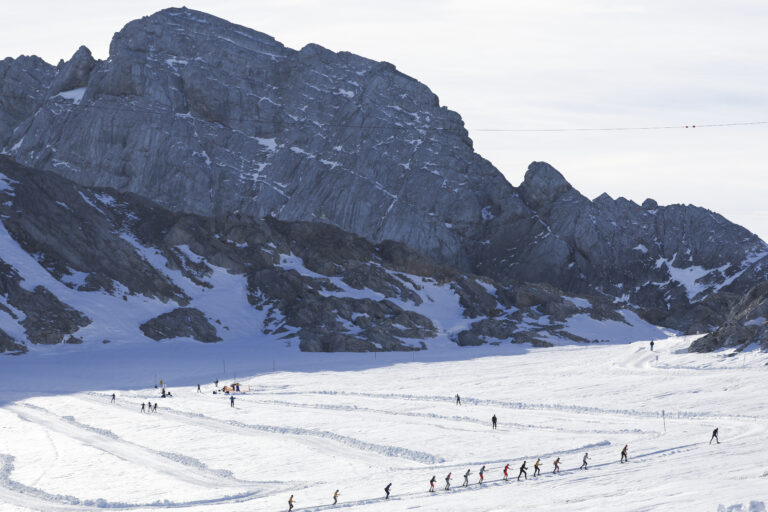
Pro Team Athletes Crave for Calories

Cross-country skiing, and long distance in particular, is a strenuous sport, which requires a lot of work, patience and tons of energy. Pro Team athletes can train from four to five hours a day at their peak and push their bodies to the limit. As a result, cross-country skiers, on average, also have the biggest fueling demands of any…
Cross-country skiing, and long distance in particular, is a strenuous sport, which requires a lot of work, patience and tons of energy. Pro Team athletes can train from four to five hours a day at their peak and push their bodies to the limit. As a result, cross-country skiers, on average, also have the biggest fueling demands of any athletes, besides perhaps triathletes and long distance cyclists. While there have been big eaters in other sports, too, such as Michael Phelps in swimming, many scientists say the effort to stay in calorie balance is most daunting for cross-country skiers.
What is a calorie then? We all talk about it every day when training and racing, but we may not know exactly what the word means. A calorie is a unit of heat energy. It is the amount of energy that is needed to raise 1 gram (g) of water by 1°C. This measurement can be applied to lots of different energy releasing mechanisms outside of the human body. For the human body, calories are a measure of how much energy the body needs to function.
Naturally, food contains calories, and different food has different calorie counts, meaning that each food has a different amount of potential energy. There are three basic types of foods that make up all the food that humans eat: carbohydrates, proteins, and fats. These three different types of food have varying amounts of potential energy per gram.
A typical elite cross-country skier burns about 700-100 calories per hour during training, which means that an active male cross-country skier skier must consume 7,000 to 8,000 calories a day, which is more than three times the caloric needs of an average male, to meet the energy demands of the sport. Female elite skiers must eat about 3,500 to 4,000 calories a day, which is about double the calories consumed by the average woman. That’s a lot of food to consume — the equivalent of about 20 plates of lasagna or 40 scoops of ice cream.
In a long distance ski race, an athlete can consume about 10-25 grams of carbohydrates every 15 to 20 minutes, and additionally many eat at least three regular meals each day and five to six small meals. So, it’s not an easy task to re-fuel yourself when you train hard and aim to achieve great results in Visma Ski Classics.
For cross-country skiers, who often have slim builds and limited stomach capacity, it means eating several times a day, and often planning their schedules around their constant meals. Many have tricks to help them fuel. They eat mashed foods, high-calorie bars, calorie-laden sports drinks and make sure that their daily meals are full of good carbs and calories.
When training really intensively and pushing really hard, the athletes’ bodies release hormones that suppress appetite making it an even bigger challenge to get the necessary nutrients. They don’t simply get enough energy and nutrition as they don’t feel hungry.
Generally speaking, we can say that our body needs high quality food and not just “empty” calories from plain fats or sugars. In simple terms, it is vital to be concerned with both quantity and quality of foods. A variety of proteins, fats, and carbohydrates from various food sources are necessary to build the many tissues of the body, and supply the body with the best energy for physical performance.
Subscribe to our newsletter
Most read
-
10.05.2026
-
01.05.2026
-
16.05.2025
-
14.05.2026
-
06.05.2026





More Articles
-
Why train at high altitude?
Endurance sports and high-altitude training are closely linked. But why do all these sports place such importance on this kind of training camp?17.06.2026