Brașov’s first EYOF left venues. Did it also leave visitors?
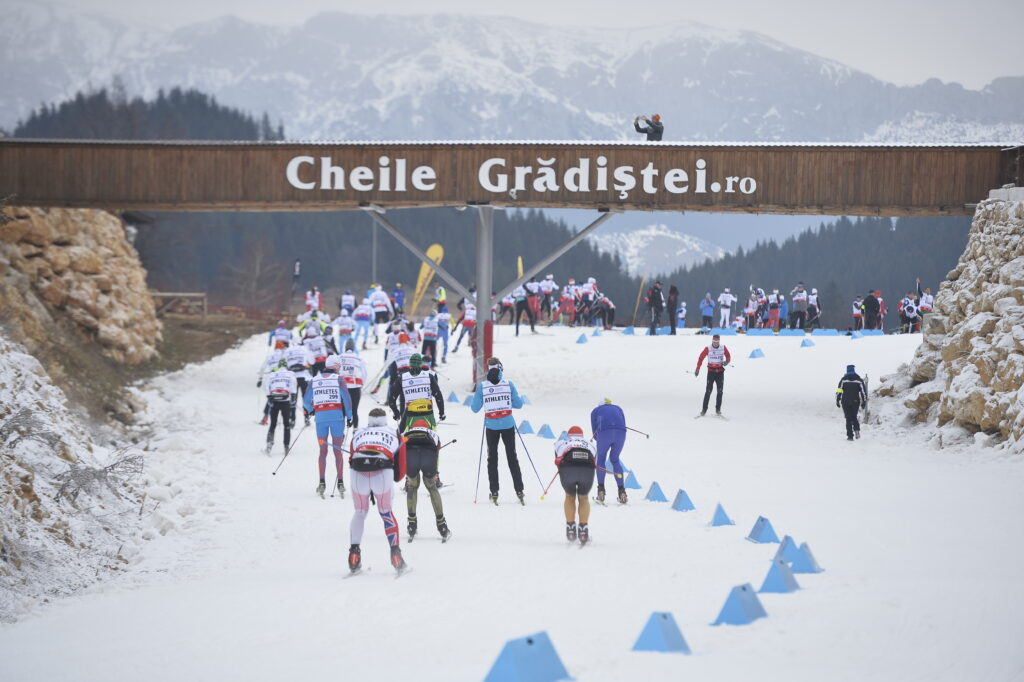
Brașov hosts EYOF again in February 2027. Since 2013, it has kept its snowmaking, ski jumps, and a biathlon base, but the tourism figures cannot show how much visitor growth, if any, the first Festival caused.
Brașov staged the Winter European Youth Olympic Festival (EYOF) in February 2013 and does it again from February 14 to 21, 2027, so the first Festival can therefore be checked against what it left behind. The record is mixed.
What 2013 left on the ground
The clearest legacy is in Poiana Brașov. Mayor George Scripcaru says the resort was reborn through investments made with the Ministry of Tourism ahead of 2013. Local reporting puts the works carried out in 2011 and 2012 at about 25 million euros, which enlarged the ski area by 35 hectares to 85, lengthened the slopes from 16.4km to 24km and gave the resort what was then the country’s largest snowmaking system.
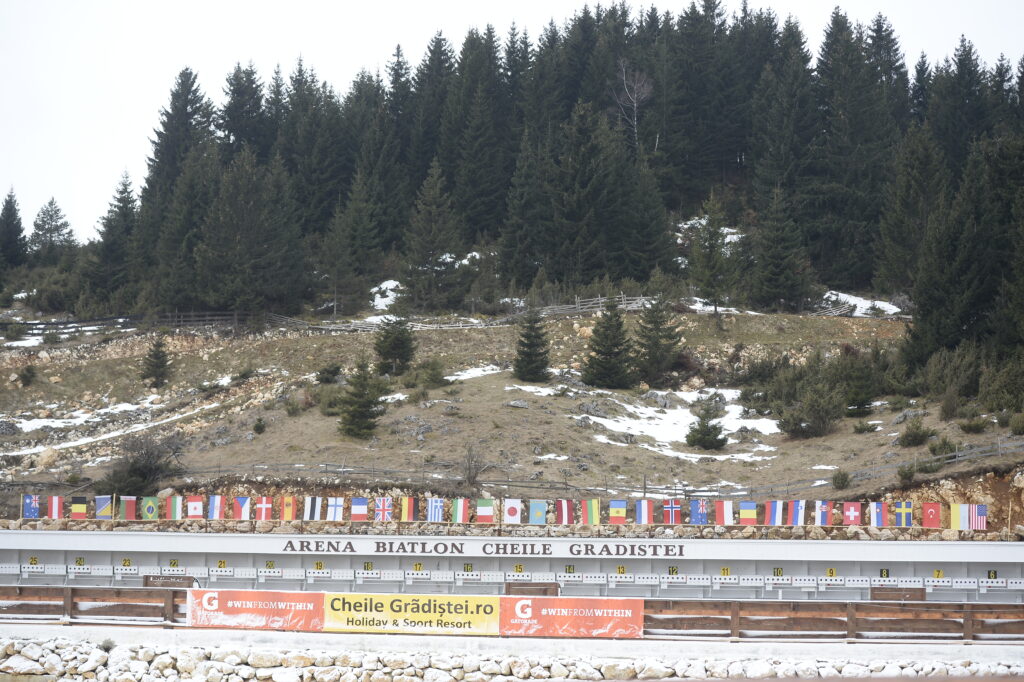
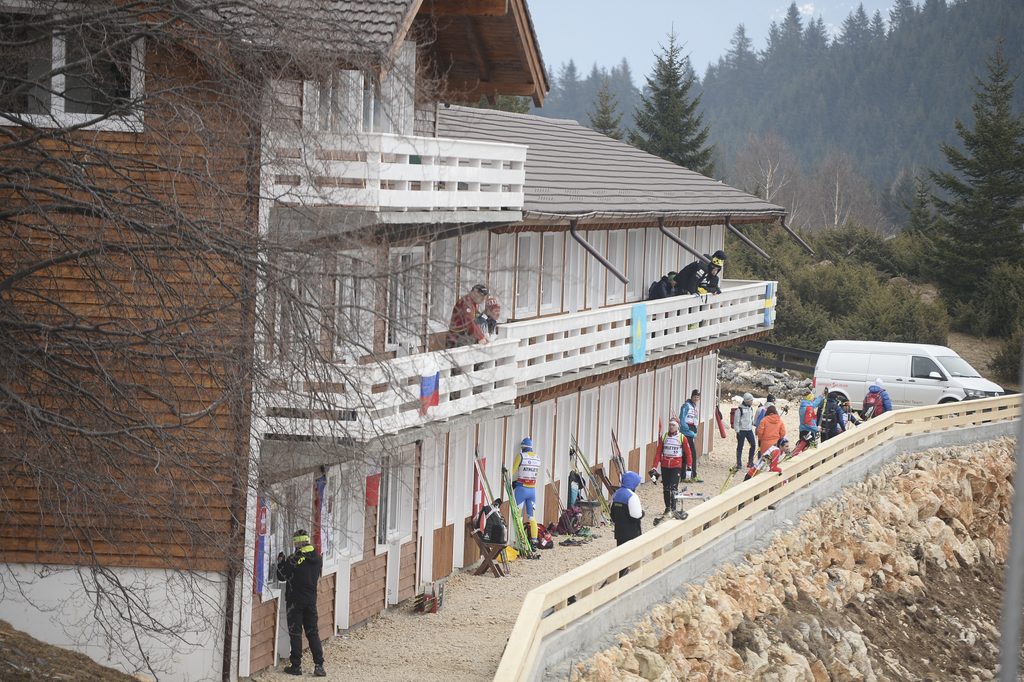
For Nordic skiing, the story runs through Cheile Grădiștei. A national sports weekly noted that the 2013 Festival was the first major competition on the resort’s sports base, which the resort had built itself. Three years later it hosted the IBU Youth and Junior World Championships, with 39 nations taking part, on a budget of about 2.4 million lei shared between the sports ministry, the ski and biathlon federation and the owner. The Nordic junior and under-23 world championships followed weeks later, spread over Cheile Grădiștei, Râșnov and Predeal.
Not everything planned came through. In 2013, the city hall began preparing an extension of the Poiana ski area towards Râșnov, hoping for EU money. The environmental agency rejected the zoning plan in 2016, and a feasibility study for upgrading the existing area was only tendered in 2021.
Did the visitors follow?
County figures from the years around the Festival show steady growth. Brașov County recorded 731,852 tourist arrivals and 1.475 million overnight stays in 2012. Arrivals rose about 13% in 2013 and 4% in 2014, when they reached 865,689.
Between January and November 2014, overnight stays grew only 1.4% compared with the same months of 2013, while foreign arrivals over the same months went from 119,079 to 131,987. Bed capacity rose from 25,524 in 2013 to 28,616 in 2015, about 12%.
The 2013 Festival itself is hard to find in those numbers. Arrivals had already grown 14.7% in 2012, the year before the event. The latest figures are weaker: in 2025 the county reported 1,388,993 arrivals and 2.62 million overnight stays, down 7.9% and 7.3% on 2024. The fall came from Romanian visitors, down 10.4%, while foreign arrivals rose more than 10% to 201,719. In December 2025, arrivals fell 13.4% year on year. These 2025 figures cannot be set directly against 2012 to 2014.
The national monthly statistics now include apartments and rooms for rent, and it is not clear that the older series did or that the 2025 county figures use the same basis. The sources reviewed do not allow a reliable comparison between the years around the Festival and today.
What other hosts found
Evidence on EYOF is thin. A recent Dutch review by the MOVES research group found that most evaluations look at short-term effects, that long-term studies are very scarce, and that the data are often neither public nor comparable. It adds that any rise in visitors and overnight stays after an event probably depends on how well the local tourism sector prepares offers and on how many beds are available.
With so little long-term evidence, the useful comparisons are winter hosts with Nordic venues.
Vuokatti, in Finland, held the Winter Festival in 2022, with biathlon and cross-country skiing among the sports, and the MOVES review gives its budget as 2.9 million euros. Brașov’s estimate of about 20 million euros covers both running the event and modernizing facilities, so the two are not like-for-like.
Lillehammer, which hosted the Winter Youth Olympic Games in 2016 rather than an EYOF, kept its 1994 Olympic venues busy: IOC figures list 129 World Cup events there up to 2018. An Olympic Cities evaluation still found that tourism grew less than expected after the 1994 Games. The village built for the 2016 Youth Olympic Games now houses 360 students.
What it means for 2027
Looking back at 2013, venues that came with a calendar kept hosting events. Râșnov held its first women’s ski jumping World Cup in 2014 and was still hosting World Cup ski jumping in 2023, and Cheile Grădiștei carried on through its owner and the federation. The Poiana extension, which depended on follow-up money, stalled.
Even the working venues need renewal: the Poiana town hall is buying four new groomers worth more than 8 million lei (about 1.5 million euros) and 14 snow cannons with environment fund money, and the mayor says the 2013 investments have to be followed by others.
For cross-country and biathlon, little of this is documented. No source reviewed shows spending on the Predeal cross-country trail, none gives a post-Festival calendar for the 2027 Nordic venues, and no published study estimates what the 2027 Festival will add in visitor nights. The local benefit is also uneven. Public money goes to municipal assets in Brașov, Predeal and Râșnov, while the biathlon base is private.
Râșnov had a World Cup stage in 2014, the year after the first Festival. For Predeal and Fundata, the test is whether they land an international race in winter 2027/28, and whether the county’s winter overnight stays rise above their pre-Festival trend.
Are you interested in traditional cross-country skiing and biathlon? Click HERE and HERE to read more about it.
Subscribe to our newsletter
Most read
-
15.11.2026
-
11.05.2026
-
09.05.2026
-
07.05.2026
-
27.11.2026




More Articles
-
Program, start lists and start times for Saturday
Today, Saturday, the cross-country skiing World Cup continues in Ruka (Finland) with a classic sprint, while the Biathlon World Cup in Kontiolahti (Finland) has the relays on the program. The IBU Cup continues in Idre Fjäll (Sweden), and there are also FIS races in Santa Caterina Valfurva (Italy) and Planica (Slovenia). Get to know the program, start lists, and start times.28.11.2026