Testing, training and looking for small details: Janatová starts her season this weekend
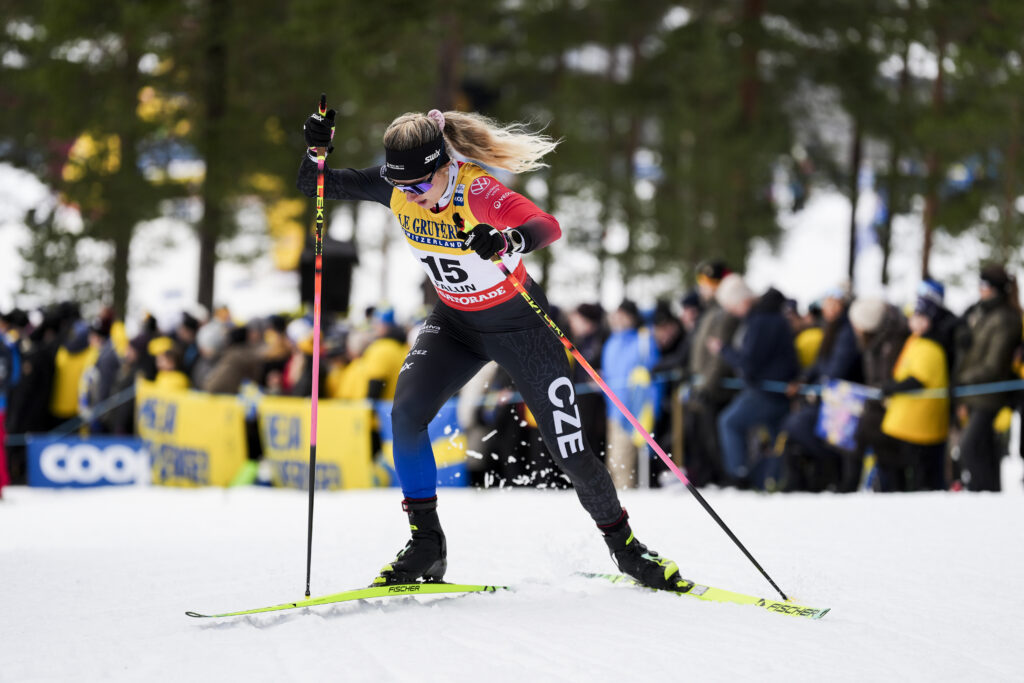
She has finished her final training camp in Davos and opens the season this weekend in Beitostølen, Norway. Cross-country skier Kateřina Janatová explains what she focused on in her preparation and ski technique, who she trains with most often and why she is looking forward to the start of the season.
Testing, training and looking for small details: Kateřina Janatová starts her season this weekend.
The Czech national team moved to Davos, Switzerland, for its final training camp. From there, Czech number one Kateřina Janatová traveled to Norway for the opening races of the season, where she will test herself before the first World Cup. How did her final preparation go?
“I was happy with it. I think I completed all the training I had written down and everything we decided I wanted to train. Even the hard sessions looked pretty good, so I’m definitely happy with that,” Janatová says about her final preparation in Davos, Switzerland, according to Bezky.net.
The hardest part for her was the early mornings. “We had to get up around six o’clock, we left at seven and we were on the snow at 7:08 so we would have the track free. Mainly for the intervals, because it’s impossible when a lot of people are skiing slowly there. The track is really narrow, short and there are a lot of people,” she says.
She does not remember crowds like this from before. “Maybe I remember it a bit differently from when I was younger, but I don’t think there was stored snow there back then. Quite young skiers go there, and quite early. I’m a bit worried that they might get tired of skiing when they have to train hard from such a young age,” she reflects.
Otherwise, she was pleased with Davos: “I think Davos was good. We had our own chef there, so we were well looked after.”
Beitostølen as a test race
Janatová goes into the opening races in Beitostølen without much pressure.
“For me it’s still a kind of test race, if I can call it that. Of course it will be listed in my FIS profile, but for me it’s still a kind of test race,” she says.
Unlike the home athletes, she does not need to qualify. “I don’t have any stress here yet, not like the Norwegians who have to qualify. I’m already qualified for Ruka, so in that sense it’s easier for me,” she explains. “I can just try how I feel after a different warm-up, for example, and I can test a bit what works better. And even if I’m a bit more nervous, I can get that out of the way here.”
It also helps that the Czech service team is there. “I had the chance to test a few things on skis as well,” she adds.
In Norway she will race two classic races. “The interval start, where I ski alone, is not exactly my favorite race. And then the classic sprint. We’ll see, but I hope it will be a good experience and that I can still learn something in those races. I’m looking forward to that.”
On Friday’s 10km classic race, Janatová finished in 12th place, 1:28.2 behind the winner Heidi Weng.
Also Read – Weng wins in Beitostølen for the third year in a row: “I guess I have some experience”
Less illness, more intensity
The main change in this year’s preparation was higher intensity. “I tried to train a bit more intensively, by which I mean above the anaerobic threshold, so I would spend a lot of time at that intensity. Last year it didn’t go very well, I was sick a lot, but this year I have to say it’s good. I was able to train quite a lot more, so I hope it will show, and we’ll see,” she says.
However, she says that taking another step in performance is complicated. “I said I would like to take another step. But it’s really hard for me to find where I still have some reserves. I feel like I already have such an established routine that it’s quite difficult to find small gaps and improve enough to see any big progress.”
Technique
Janatová worked on her technique with Ragnar Bragvin Andresen, a coach who is in his fifth season working with the Czech team. “For me, the most important thing is probably using my upper body. My legs are stronger than my upper body, so it’s about making it all work as one unit,” she explains.
“Of course, after everything we’ve already worked on together, these are tiny details. But it mostly comes down to the poles, how close or far apart my hands are, and so on. So that’s probably the most important thing.”
Read More: Norwegian technique coach working for the Czech team
Kilometers alone
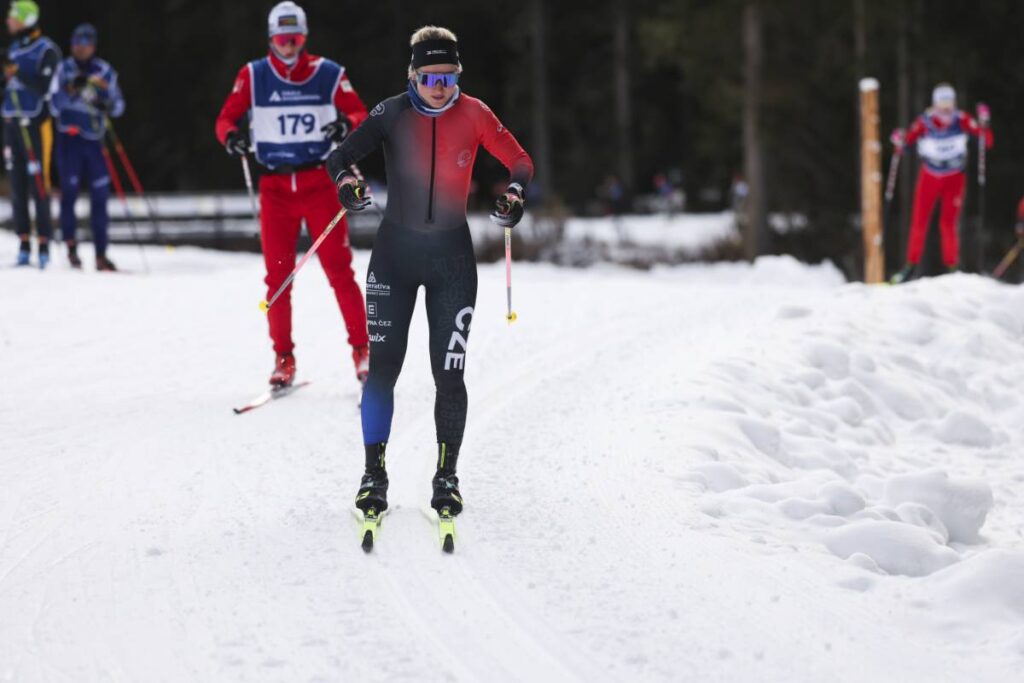
The focus on higher intensity in her preparation has also partly affected who she trains with. “James and I sometimes do some sessions together, but this year, since I added a bit more intensity, I have to be more careful with the slower sessions. So I don’t ski at a higher intensity than I should, and so the total load doesn’t get too big. It also adds up with the easy sessions, so sometimes I have to ski them a bit slower than he would,” she says. British cross-country skier James Cugnet, who focuses on the World Cup, is Kateřina’s long-time partner.
“I have to say that I’ve done quite a lot of training on my own lately. Even when we were at camps with the Czech team, we did some sessions together when I had slightly faster roller skis than the guys.”
So far she does not train with her national team teammates. “Unfortunately, the girls still have a slightly different pace than I do, so we don’t train together much yet. That’s a shame for me, but I hope it will get better and then maybe I’ll have a training partner.”
She says being alone is the price of the training volume. “At that point you don’t have a choice. When you train so many hours, there isn’t really anyone who could do all of it with me, unless it’s a professional athlete.”
It is similar at home in Jilemnice. “Sometimes I go with a friend and take much slower roller skis, but I have to say I don’t have many people to train with there,” she says. What she enjoys most is company from her family: “When I have an easy cool-down run, I’ve even gone with my mom, which made me really happy, that she’s actually a kind of training partner for me. Or I take my mom to the gym so I’m not always there alone.”
Tests, the season and the community coming back together
She does not have specific numbers from the fall tests, so she is not drawing big conclusions about her current form. “I did a slightly different test, and I wasn’t in Lillehammer this time to do roller skiing on the treadmill, so I don’t have many answers. And tests are simply different. Some people have a really great test and it looks like they have improved a lot, but then in winter they can’t turn it into results on skis. So tests can be misleading,” she says. “But I think I’m in good shape. I hope better than last year. We’ll see.”
She takes a calm view of the start of the season. “I always tell myself that even if the start of the season doesn’t go so well, there’s no need to give up and think the whole season is bad. I usually get going better after the Tour de Ski, the races at altitude suit me and there are many of them in the calendar. The last two years the championships have gone quite well for me, so I’ll keep going like that,” she says. “It would be great to get off on the right foot in the races.”
She is also looking forward to the start for another reason. “We’re meeting people from the skiing world again, and I feel like our community is coming back together. I think that’s really nice.”
Read More
Program and TV times for the cross-country season openers
Where to watch the 2026/2027 winter season: cross-country skiing, biathlon and the World Championships
Are you interested in traditional cross-country skiing? Click HERE and read more about it.
Subscribe to our newsletter
Most read
-
15.11.2026
-
11.05.2026
-
09.05.2026
-
07.05.2026
-
03.10.2026

More Articles
-
The next generation of Ski Classics: Cub and Youth by the numbers
Nearly four in ten athletes on the Ski Classics World Championship Season XVIII Pro Team rosters race in the Cub or Youth categories. From 17-year-old Aaron Gunnarsson to Vasaloppet record holder Alvar Myhlback, here is a closer look at the young athletes heading to the start line in Bad Gastein on December 11.20.11.2026