Madshus halts production, lays off employees for an indefinite period
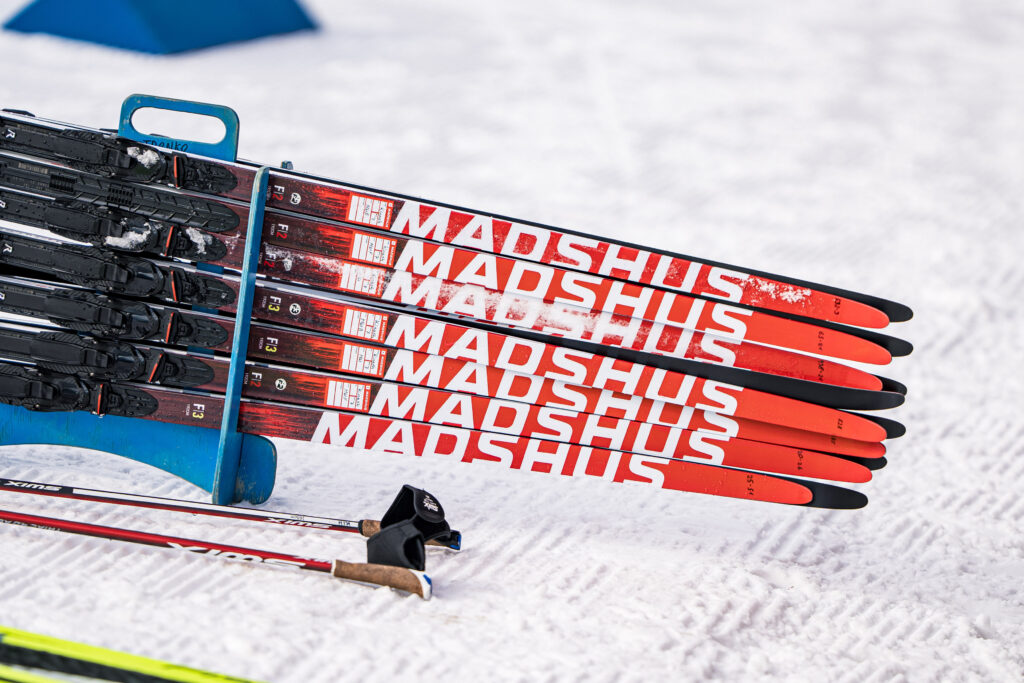
The Norwegian ski manufacturer is being forced to stop production and temporarily lay off nearly half its workforce at its Biri factory for an indefinite period.
Madshus will lay off 29 of its 66 employees and pause all production at its Biri factory until further notice.
The decision was made by management following a Monday meeting with employee representatives, in cooperation with the company’s American owners. Later the same day, employees were informed at an all-hands meeting.
The production halt is due to a challenging market situation.
“It’s no secret that the sports industry has been through a tough period since the pandemic, especially the ski industry. We’ve had three winters with little snow in our most important markets, Norway and Sweden. Right now, we have so much stock in our warehouses that we need to sell it before producing more,” Madshus CEO Fredrik Kjellberg told GD.
Complete shutdown at the factory
Those primarily affected by the layoffs are employees working in production and the workshop at Biri. They have been instructed to register with NAV to receive unemployment benefits.
Madshus has also postponed purchases from its suppliers and manufacturers in Asia and Europe.
The situation will not affect retailers and customers.
“Sports shops have most of our top models available, and we also have products in stock, so customers will not be impacted,” Kjellberg says.
Production halted through the winter
The Biri factory produces all racing skis and the top models of touring skis. Together, these segments account for roughly half of Madshus’ total ski production volume.
Kjellberg, who took over as CEO in autumn 2025, does not have a concrete date for when operations can resume. However, he hopes production can restart after Easter.
Madshus will now implement several efficiency and quality measures to restart production at Biri as soon as possible, but it remains uncertain when this will happen.
Industry leader in innovation
In recent years, Madshus has invested heavily in innovation and product development, committing significant resources to research, testing, and production equipment.
“I am incredibly proud of the products we have developed. We have the most skilled employees in the market, and together we make the world’s best cross-country skis. Of course, we are disappointed with the financial results,” says Kjellberg.
In 2024, Madshus launched the groundbreaking Skate-X binding system, which generated major headlines.
Biathlon rising star Johan-Olav Botn raced with the new bindings last winter, when he claimed nine individual victories in the IBU Cup, two World Cup podiums, and one gold and two silver medals at the European Championships. At the time, Ole Einar Bjørndalen described the new technology as revolutionary, a claim later confirmed by third-party testing.
This spring, Madshus and Rottefella received the prestigious “Product of the Year” award at the Norwegian Industry Design Day.
The world’s oldest ski factory
Founded in 1906, Madshus is the world’s oldest ski factory still in operation. Here are some milestones from the past 50 years of the company’s history:
- In 1974, fiberglass skis became widespread, forcing Madshus to convert a brand-new wooden ski factory to fiberglass production.
- In the 1980s, Madshus introduced the DoubleBox construction for fiberglass skis, a principle still used in today’s top-level ski construction.
- The 1980s also saw the introduction of black ski bases. Madshus was the first to add carbon black to the base, delivering excellent glide.
- In 1988, Madshus was acquired by the American K2 Group, gaining access to shared sales and marketing structures and significant resources for product development and innovation.
- In the 1990s, CAP construction replaced sandwich construction. Today, all major ski manufacturers use some form of CAP construction, but Madshus was first to apply it to cross-country skis. Salomon was an early adopter of CAP construction in alpine skis.
- The 1990s also introduced 3D construction, further enhancing ski performance. By using the ski’s geometry, manufacturers can fine-tune desired characteristics. “Other brands use 3D construction, but none to the same extent as Madshus,” says Austrem.
- In the 2000s, the NIS system was introduced, featuring screwless bindings adjustable to snow conditions and a skier’s individual technique. Madshus owns the NIS patent but developed it together with Rottefella and Rossignol.
- In 2012, the Redline skis were launched, revolutionizing the industry. Extremely light and lively, with exceptional glide and reliable grip, the skis allowed Madshus to capture significant new market share.
Subscribe to our newsletter
Most read
-
03.08.2026
-
-
26.07.2026
-
28.01.2026
-
14.09.2026



More Articles
-
Skiers embrace new trend: “Of course it’s interesting”
The trend has grown among cyclists, and now skiers are following suit.