How Northug Trained At Altitude?

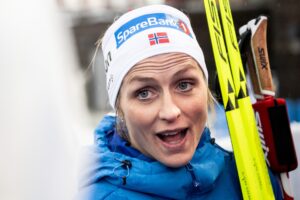
Petter Northug Jr. is back and will be joining Ski Classics. The superstar skier used altitude training systematically over many years, including the seasons in which he performed at his best. This is how he trained at altitude.
Petter Northug is one of the athletes who has used altitude training systematically and spent the most time at altitude, both on and outside the national team.
“Altitude training is part of endurance sports. Petter’s medals were based on good altitude training,” says John Northug to Langrenn.com.
Langrenn.com chatted with John Northug about his son’s altitude training, how he set up the altitude camps, why he did it that way, and what effect he got from his altitude program.
John Northug was manager for Petter Northug Jr. through large parts of his son’s career at the World Cup level and had a good overview of how Petter set up his training in his best seasons.
After traveling around at high altitudes with Petter and his brothers Tomas and Even for over two decades, John is sitting on a gold mine of experiences and observations.
John Northug knows that training camps at altitude must be planned thoroughly and carried out in a disciplined manner to get the most out of it.
What is decisive for getting good results from altitude training?
“It’s about having enough time at altitude. There is a more significant change in blood volume after three weeks at height than after two. You will then be able to train at a higher level when you return to the low altitude. That is why Petter’s stay at altitude during the base training season and the run-up to the season was almost always three weeks long.
John Northug also emphasizes that the intensity of the sessions is decisive for the altitude effect.
“The biggest change in blood volume occurs when you just stay at altitude without training or exercise at a low intensity,” he says.
John Northug explains that Petter was aware of the effect of staying at altitude and utilized it in situations where other skiers often choose to go home.
In the preparations for the World Championships in 2015, Petter fell ill during the altitude stay in Val Senales. Then he just lay in bed there for a week to get the effect of being at 3.000 meters high, even though he couldn’t train. So when he recovered, he had maxed out his stay to resume training at a higher level,” recalls John.
What does a solid altitude base mean for the racing season?
“What we saw with Petter was that in the seasons in which he had been able to complete the three 3-week camps at altitude as planned before the start of the season, very little was needed to get a new altitude boost when he needed it later in the winter,” says John Northug, and continues:
“With a solid base in the run-up to the season, Petter could manage with a 10-day stay at altitude to get an altitude effect. The altitude effect of the short stays didn’t last as long as after a three-week stay, but it was something he exploited systematically to get a peak in form for important races.”
What did Petter’s altitude training regime look like in his best seasons?
“Typically, Petter had three 3-week camps at altitude before the start of the season. The first was usually in June, and the second in August-September. These sessions were mainly about easy volume training. The last camp at altitude was October-November, so he came down no later than a week before the season-opening at Beitostølen,” says John Northug.
“Many believe that the last training camp before the season is something completely special or different. For Petter, this gathering was usually in Val Senales, so he got to train on snow on the glacier, which is 3.000 meters above sea level, and he also trained five hard sessions. But otherwise, the program of all the altitude camps was quite similar. In any case, you must adapt each session’s program according to how much and what you have done from training. You can train a little harder in October if you have trained well all season.”
Was a week after such a long and arduous stay at altitude enough to get you in top shape for the season opener at Beitostølen?
“Yes and no. He probably didn’t have an optimal shape for the opening races at Beitostølen, but the first World Cup races were usually the most important to him. It only arrived one to two weeks after Beitostølen.
FACTS: ALTITUDE TRAINING AND ALTITUDE EFFECT
Why travel to altitude?
For decades, endurance athletes have used training periods at altitude as part of their overall regimen. However, the length, altitude, and program of such stays vary depending on the purpose of the training camp.
Common purposes for staying at altitude include:
- To achieve a physiological altitude effect in the form of increased blood volume and an increase in the hemoglobin mass in the blood, i.e., the body’s ability to transport oxygen around to the muscles, improving performance.
- Acclimatization, i.e., getting the body used to living and performing at altitude.
- Testing how the body responds to different intensities at a specific altitude, for example, in connection with preparations for championships held at altitude.
- Have a period of training with careful focus on details, intensity management, and recovery routines.
Subscribe to our newsletter
Most read
-
08.08.2026
-
17.07.2026
-
10.07.2026
-
08.07.2026
-
23.07.2026

More Articles
-
Ketterson wins pursuit and takes overall victory at Toppidrettsveka 2026
The third and final day of the Toppidrettsveka 2026 saw Zak Ketterson win the pursuit roller ski race in classic technique. Check the results and overall standings.23.08.2026