The fluor ban: Fears of sabotage
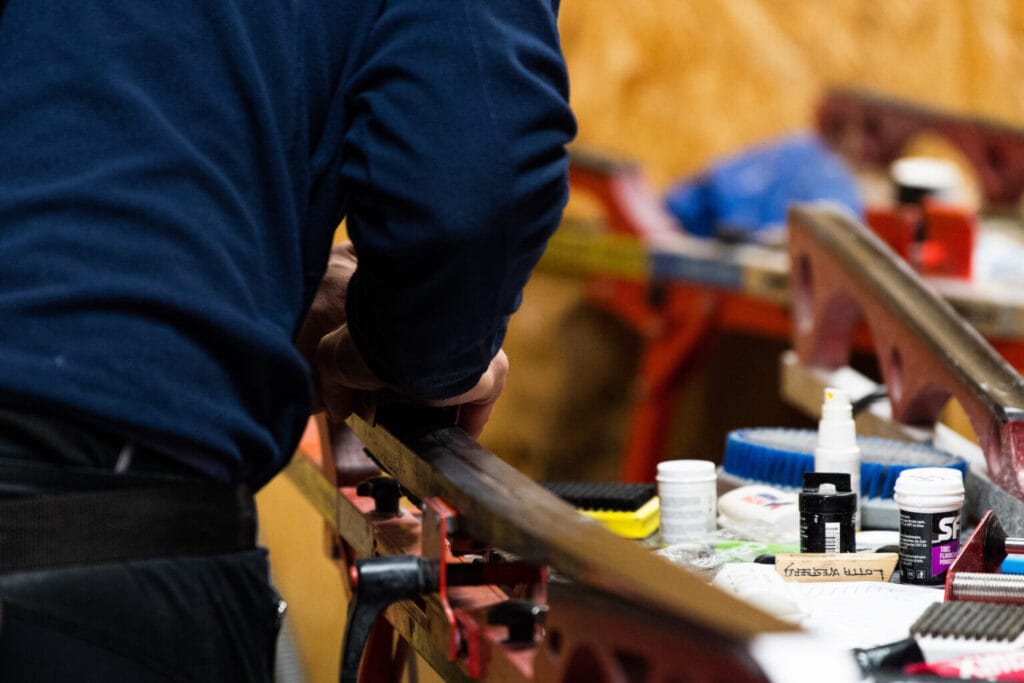
The fluor ban is causing concern: “If someone wants to sabotage, they will find a way to do it.”
Maja Dahlqvist is one of several Swedish cross-country skiers worried about deliberate sabotage when the World Cup starts in Ruka at the end of November, and the total ban on fluor comes into force.
The cross-country skier, who won the sprint World Cup for the second year last winter, is supported by Sweden’s national team manager Ander Byström.
“It’s impossible to protect against this,” Byström told the Swedish newspaper Expressen.
The fluor ban was adopted several years ago by both the International Ski and Snowboard Federation (FIS) and the International Biathlon Union (IBU) but has been postponed until now due to uncertainty about testing on-site.
Now, the testing equipment and procedures are considered reliable, and the ban comes into force at all levels. This means that all athletes’ skis will be tested before the start and after the finish. The consequences of a red result on the fluorometer are brutal: Those who test red for fluor will be disqualified, and the decision cannot be appealed.
Also Read – Fluor ban: How to clean skis and equipment.
Vulnerability
Last weekend’s fluor scandal during the opening race of the Alpine World Cup in Sölden, Austria, clearly shows how little it takes and how vulnerable you are to sabotage.
The skis of Norwegian national team athlete Ragnhild Mowinckel, who was given the green light for the first half of the race, suddenly came out with enormous amounts of fluor less than half an hour later. Mowinckel was disqualified.
According to FIS, Mowinckel had ten times more fluor under her skis than any other athletes in the field and far more than the limit for disqualification.
Less than a week after the fluor scandal in Sölden, it became clear why the skis had excessive fluor levels: Tools in the waxing room were to blame.
The incident has caused alarm and concern throughout the skiing community, even far beyond the alpine camp. Not only is it feared that a slight slip in the waxing room. Many also fear deliberate sabotage.
The article continues below.

Halfvarsson: “Would be a disaster.”
Sweden’s national team veteran Calle Halfvarsson is among the skiers skeptical about how the fluor ban will work at the World Cup in cross-country skiing.
“I feel uncertain. I know that there have been a lot of problems with the testing equipment. It hasn’t worked, but suddenly, it’s supposed to work now. But can we be sure that it will work on the day we stand there and start in Ruka? I don’t know,” Halfvarsson says and adds:
“It would be a disaster if we’re standing there and it doesn’t work. And what do you do then?”
You don’t seem convinced that it’s going to go well.
“No, I don’t. And nobody is, are they? I’m not sure FIS is either.”
The article continues below.

But even if the testing equipment proves to work, the ban and the way it is enforced opens up a new challenge: The risk of sabotage.
“Yes, that aspect is present,” says Sweden’s national team manager Ander Byström.
He points out how little it takes to test red in the fluor control after the finish.
“All it takes is for a spectator to get the idea that ‘that guy is going too fast now’ and throw fluor on the course. And you can never protect yourself from that kind of sabotage,” says Byström.
Sprint star Maja Dahlqvist has prepared for something like this to happen.
“Now there’s suddenly another rule that you could be in danger of breaking. And if someone out there wants to sabotage, they’ll find a way to do it. Especially now at the start of the season, before you’ve got a handle on how everything works,” Dahlqvist says.
Read More: Norwegian fluor-free guide becomes an international standard.
Subscribe to our newsletter
Most read
-
03.12.2021
-
16.02.2026
-
21.02.2026
-
14.02.2026
-
10.02.2026



More Articles
-
Nutrition does not have to be rocket science
Finnish nutritionist and Master of Food Science Kaisa Sali would like to see an increase in coaches' knowledge of nutrition, for example, by adding nutrition sections as a part of their overall coaching training.22.08.2026