Focus on altitude training for the Swedish national team

The first summer training camp for the Swedish national team will be at a low altitude. But during the pre-season, the squad will focus on training at high altitude.
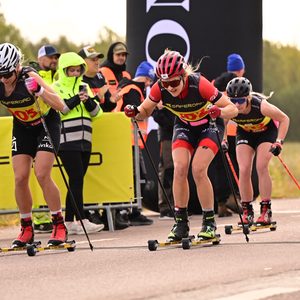
Next week it’s time for the Swedish cross-country ski team’s first training camp of the season, taking place as a ‘transfer camp,’ where the athletes will roller ski 300km in 4 days, starting in Falun and ending at Södertälje.
Read More: 300km on roller skis for the Swedish National team
Next winter season has no major championships (World Championships or Winter Olympics) for the cross-country skiers. Still, there will be no significant changes in the pre-season training, according to Swedish national team manager Anders Byström:
“Of course, you can dare to practice other things during a season without a championship. If these “tests fail,” the drop will be less than if it happens during a season where a championship awaits. But we have a bunch of successful skiers who have done well in the past. Then it feels stupid to make any big changes. So, the difference will be above all when it comes to competition planning during the winter; when it comes to summer training, it will be very similar to how it was before.”
One change, however, will be that there will be an increased focus on training at high altitudes:
“There has been a request from some skiers to focus more on training at high altitudes. Here there is individualization, but those who want to be more at altitude should have the opportunity to do this, and here we will get support from the Swedish Olympic Committee who will help us, which is needed because of the financial situation.”
The plan is to have a more extended camp at a high altitude in Livigno, Italy, during the latter part of the Fall:
“We believe it is important, not least for our younger skiers to “practice” being at high altitude. Considering the climate changes, it is not unthinkable that there will be more competitions at high altitude in the future, and then we must be prepared for this,” says Byström.
For the cross-country skiers, the 2025 World Championships (Trondheim, Norway) and the 2026 Winter Olympics 2026 (Val di Fiemme, Italy) are contested in low altitude.
“For our part, it’s not about having a championship at a high altitude, but that we want to achieve a quality in training; we want, above all, our young skiers to learn about training at high altitude and that there has been interest from some skiers who want more training at altitude,” says Byström.
One of those who focused on high-altitude camps last season was Emma Ribom:
“I feel good at high altitude, I like that type of training, and I have received good responses with camps at altitude before. So, my plan has always been to work on that part,” says Ribom.
Also Read: Swedish cross-country skiing teams for the season 2023/2024
Subscribe to our newsletter
Most read
-
21.02.2026
-
03.12.2021
-
22.02.2026
-
30.08.2026
-
18.02.2026


More Articles
-
Travel Guide – Engadin Valley: Swiss precision meets high-altitude beauty
The Engadin Valley has hosted Ski Classics since Season IV, and today Engadin La Diagonela is one of the most respected long-distance skiing events in Europe. What began in 2014 as an emergency replacement race after a Czech event was cancelled for lack of snow has grown into a cornerstone of the Ski Classics calendar, drawing around 1,800 athletes from dozens of nations every January.22.09.2026