Sven-Åke Lundbäck: Vasaloppet Winner and Hero
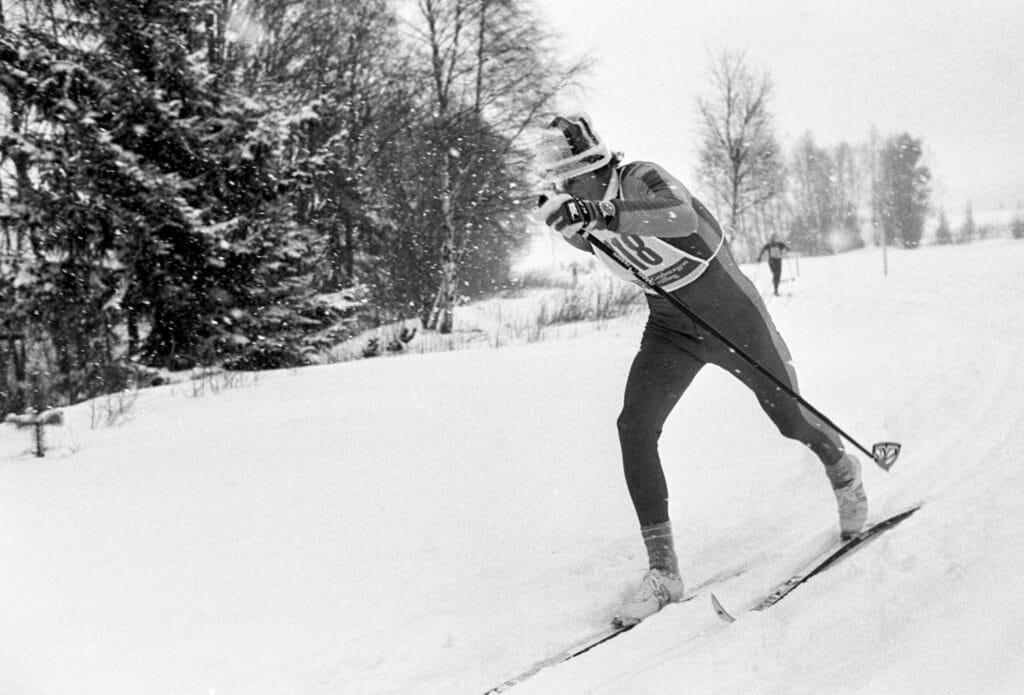
Sven-Åke Lundbäck is one of the Swedish skiing legends who has gained fame in prestigious competitions and won the Vasaloppet. In our interview, the skiing hero recalls his 1981 victory at both the Sapporo Olympics and the World Championships in Lahti. Vasaloppet’s famous final climbs called Lundbäcksbackarna are also named after him.
In 1980, Sven-Åke Lundbäck rejected the national team but did not want to end his career without skiing Vasaloppet.
“I had already decided I wouldn’t hang around with the national team for so long. When I made my decision, I was second to Wassberg. And I had already decided before this that Vasaloppet had to be skied, says 74-year-old Lundbäck, who once had extraordinary VO2max values: 94.6 ml/kg/min.
The Sapporo Olympics in 1972 and the 15km distance race are vivid in Lundbäck’s memory.
“In the 30km, it started to snow an hour before the start, and that race was unsuccessful. But in the 15km race, the weather was completely different. It was seven or eight degrees below zero, with sunshine and hard tracks. I skied as always, at full speed from start to finish. I only had one pace when I raced. Or, to be precise, my speed was 98 percent of the maximum. In those days, starting more calmly and tightening up towards the end was common. However, I wanted to ensure I had enough of a lead at the halfway point and got a 30-second gap on the others. Then I just tried to keep my position until the end,” Lundbäck says about his famous skiing.
Six years after Sapporo, it was time for the World Championships in Lahti. Those races and Lundbäck’s skiing 50km are still well remembered by many athletes who followed skiing.
“The Lahti tracks did not suit me. The course had long, flat sections, but I took advantage of all the uphills I could, which took me to the win. It feels great that I could win both the 15km and 50km races. However, today’s sprint skiing would not have suited me at all. I would have only been stuck on my feet on those races,” Lundbäck laughs.
Only a few other skiers have won individual gold at the World Cup, the Olympics, and Vasaloppet. In addition to Lundbäck, these skiers are Sven Utterström, Sixten Jernberg and Assar Rönnlund. Later, the Polish Justyna Kowalczyk also reached this milestone.
Sven-Åke Lundbäck’s road to Vasaloppet victory began less than a year before the race.
“My old national team coach Bjarne Andersson assembled a long-distance skiing team intending to ski the Central European Games. Dolomitenlauf in Austria was our first race. The route was flat, and there was one hill 20km before the finish. I hit it but got caught before the end and lost outright. In Marcialonga, I decided to stay with the main group until the last hill, and then I hit full and got my chance.”
In that race, the 1978 Vasaloppet winner and 50km bronze medalist of the Lahti World Championships, Jean-Paul Pierrat from France, came second. The difference between Lundbäck and Pierrat was eight seconds. Pierrat also finished first in the 1982 Vasaloppet but was disqualified due to changing skis.
In addition to his valuable race medals, Sven-Åke Lundbäck will forever be associated with Vasaloppet. Partly because he managed to win the race in his first and only attempt, but also because the hills that bear his name are still a prominent part of Vasaloppet brand. The skiing legend knew almost nothing about the course beforehand.
“To be honest, I had no sense of the whole track. I knew that after Evertsberg, there would be hills, and there would be the place of my attack. When we approached those hills, I moved from the back group closer to the front, and after the course went down, there was a rise. I hit it, but it was too short, and my lead was closed. I had to wait until we got to those Oxberg climbs.”
Lundbäck skied in the lead with Mieto, who had lost to Thomas Wassberg at the Olympic Games in Lake Placid the year before in the 15km race.
“I wasn’t afraid of Mieto at all because I knew that if I continued at my own pace for those climbs, I would be alone. When I saw the billboards going up, I realized this was my place to strike. I skied at full speed and got the break. The hill is divided into three different stages, and my wife stood on the first part and shouted that there was going to be a break. I continued to push, but there was still 30km to go after the hill. However, I didn’t slow down and pushed forward with speed.”
After reaching the last service point in Eldris, Lundbäck already had a lead of four and a half minutes over the others. However, he didn’t know that, and it wasn’t until a kilometer before the finish in Moraparken that he felt the victory would be his.
“Only then was I sure that I would win the race. Then came the feeling of fatigue, but I managed to finish. And I’m proud of the way I won Vasaloppet. And the fact that I did it right away on the first try. It’s also great that 40 years after my victory, I will still be associated with Vasaloppet through those hills,” says Lundbäck, who has lived in Luleå all his life.
Eleven years ago, he retired from his job as a physical education teacher, but sports are still an important part of his life.
“I still train quite often. I would say that I do about 100 ski workouts during the season. I also ride a mountain bike and do light running and strength training. So, I do three or four workouts a week.”
Lundbäck was known as a specialist in traditional classic skiing, and the shifting pace was his bravura. What does the former top skier think about today’s long-distance skiing, where the distance is covered only by double poling?
“It’s a natural development. The tools have evolved so much over the years. Double poling is now so much harder, so it makes sense to use the technique that is the fastest. I think the development of the sport is exciting, and I still follow skiing closely. Especially Ski Classics is of interest because team tactics are so important, and it’s interesting to see different roles for skiers,” Lundbäck says at the end of the interview.
Subscribe to our newsletter
Most read
-
11.05.2026
-
23.08.2022
-
09.07.2026
-
03.08.2026
-
05.08.2026
More Articles
-
Strelow and Vobornikova shine at City Biathlon in Dresden
There was a German victory in the men's category and a Czech win in the women's category at Sunday's City Biathlon in Dresden.25.08.2026