Skiers And Calories
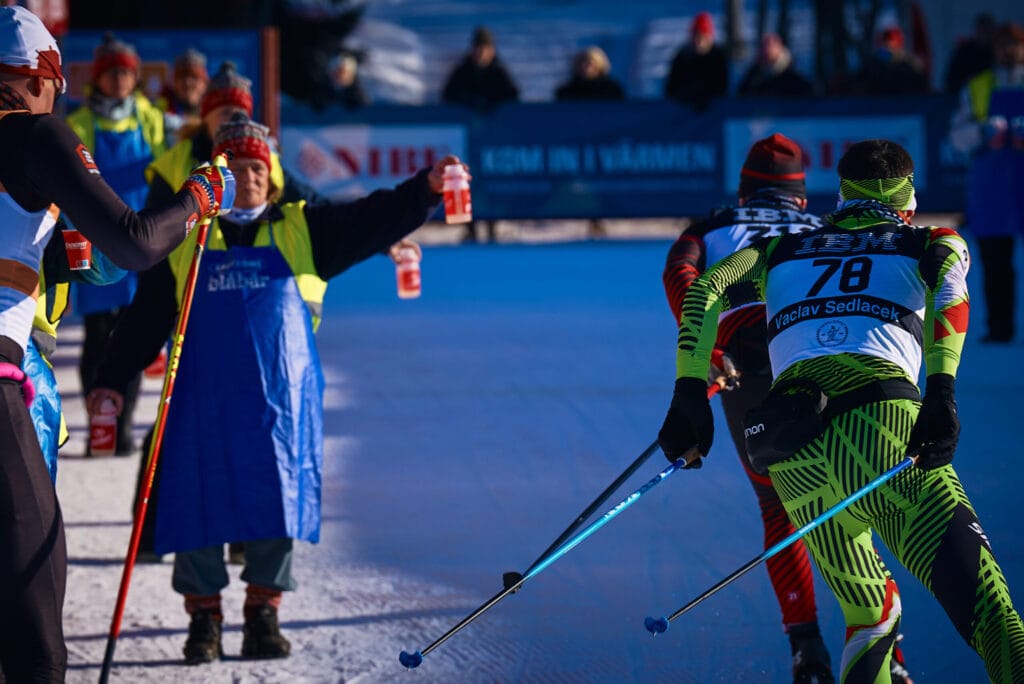
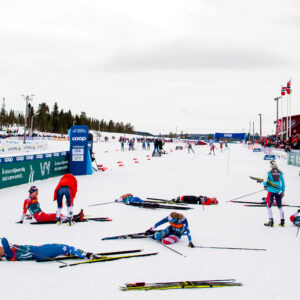
Cross-country skiing, especially long-distance skiing, is a demanding sport requiring a lot of work, patience, and energy. Top skiers in the Ski Classics series can train at their peak for four to five hours a day and more than 30 hours a week, pushing their bodies to their limits.
As a result, cross-country skiers also have, on average, the highest energy expenditure of all, perhaps in addition to triathletes and road cyclists. Although there have also been big ‘eaters’ in other sports, such as Michael Phelps, in swimming, many researchers say that maintaining a sufficient caloric balance is the most challenging in cross-country skiing.
So, what is a calorie? We all talk about it daily when we train and compete, but we may not know exactly what the word means. A calorie is a unit of thermal energy. It is the energy required to raise 1 gram (g) of water by 1°C. This measurement can be applied to many different energy-releasing mechanisms outside the human body. For the human body, calories are a measure of how much energy the body needs to function.
Naturally, food contains calories, and different foods have different amounts of calories, meaning each dish has a different amount of potential energy. All food consists of three basic elements: carbohydrates, proteins, and fats. These three different types of food have varying amounts of potential energy per gram.
A typical elite skier burns about 700 to 1000 calories per hour during training, which means that an active male skier must consume up to 7.000 to 8.000 calories per day, which is more than three times the caloric needs of the average man. Top female skiers need to eat about 3.500 to 4.000 calories daily, which is nearly double the amount consumed by the average woman. Those calories correspond to about 20 plates of lasagna or 40 scoops of ice cream.
In a long-distance cross-country skiing race, an athlete can consume about 10 to 25 grams of carbohydrates every 15 to 20 minutes, and many eat at least three regular meals daily and five to six small meals. So, it is not an easy task to refuel sufficiently when training hard and trying to achieve top results in skiing.
For cross-country skiers, who are often lean and muscular and can’t even eat large amounts of food at once, that means eating several times a day and constantly planning their schedules around their continuous meals. Many have tricks that help them refuel. Some eat mashed food, high-calorie energy bars, and high-calorie sports drinks and ensure their daily meals are full of good carbs and calories.
When training intensely and hard, athletes’ bodies release appetite-suppressing hormones, which makes getting the necessary nutrients even more of a challenge. In this case, the athletes simply don’t get enough energy and nutrition because they don’t feel hungry.
In general, we can say that our body needs high-quality food and not just “empty” calories from ordinary fats or sugars. In short, it is essential to care for both the quantity and quality of food. Different proteins, fats, and carbohydrates from various food sources are necessary to build the body’s many tissues and provide the body with the best energy for physical performance.
Subscribe to our newsletter
Most read
-
11.05.2026
-
23.08.2022
-
09.07.2026
-
03.08.2026
-
05.08.2026





More Articles
-
Never competed internationally – now he’s outshining the stars
Sturla Holm Lægreid is one of the world's most accurate biathletes, and Martin Uldal is among the fastest. None of them came close to Sivert Bjørndalen in his season debut.23.08.2026