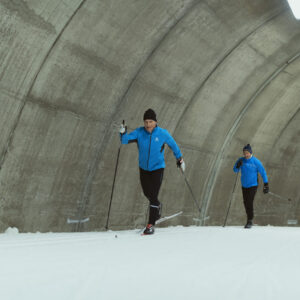
Long-Distance Skiing Scene in the USA

Perhaps best known from American Birkie in Hayward, Wisconsin, the long-distance ski scene in the USA is well spread around the country. This prestigious event is the biggest recreational skier race in North America and the only one with a year-round staff like major marathon races in Europe such as Vasaloppet.
American Birkie as a leader of the US long-distance skiing
The director of American Birkie, Ben Popp states that American Birkie is an organization with a threefold mission (1) host world-class events, (2) maintain the 100+km’s of the Birkie trail, and (3) promote sports development and facilitate an active healthy lifestyle.
It is not only limited to cross-country skiing and with its 25 employees, but they also host over 45 events during a year. American Birkie, started in 1973 by Tony Wise and has now grown to the Birkie week with over 13.500 skiers. They also hope to host a World Cup event in 2024 alongside the 50th anniversary of American Birkie.
“The trail here is wide and winding over a hill covered terrain but finishing in downtown Hayward with over 25.000 screaming fans is a bit unique as well I think… It is like finishing a race in a packed WC stadium,” says Popp.
Long distances between ski regions
5000 km. That is the distance between Alaska and Vermont, two of the major ski states in the country. In the US, the distances are taken to a whole other level and it makes the long-distance scene slightly different from Europe. According to American Birkie commentator and Olympian in 1994 Lillehammer Games, Adam Verrier, every major ski region has one to two marathon races, but they tend to attract mainly local skiers due to distances, American Birkie being an exception.
The USA does not have marathon skiing circuits such as Visma Ski Classics but rather locally organized, separate marathon races, mainly in skating. Generally, US ski marathons are not part of any formal circuit, besides American Birkie 50km skate race, which is part of the Visma Ski Classics Challengers and Worldloppet series. Other bigger marathon races in the US include: 34km skate the Boulder Mountain Tour in Idaho, 50km classic/25km skate the Craftsbury Marathon in Vermont, 50km skate/classic the Tour of Anchorage in Alaska, and 48km skate/classic the Mora Vasaloppet in Minnesota.
How does the American long-distance scene differ from Europe then?
No specialization
One interesting difference to the European scene is that there are no professional athletes focusing specifically on long distances. In Visma Ski Classics, there is solely one American Pro Tour skier Meg Lane, representing the German Endless Local Nordic Team.
Verrier explains: “The best skiers at our marathons tend to be elite skiers who would like to be racing World Cup or OPA Cup but haven’t been selected or aren’t quite fast enough, so they race a marathon race if they can fit it in their schedule. None of the top skiers at the Birkie, or any other American marathons, tend to be marathon specialists. All of them have World Cup and traditional elite distances as their primary focus.” For example, 2nd and 3rd in Birkie respectively, David Norris and Adam Martin and women’s winner Alayna Sonnesyn just missed the Olympic selection. Sonnesyn is also 2nd in the current US Super Tour standings. The other podium skiers, Caitlin Patterson was an alternate in the 2022 Beijing Olympics while Rosie Frankowski was a Sochi 2018 Olympian and currently leading the US Super Tour standings. Additionally, there are no clubs or elite teams that focus on long-distance.
On the start line with very little preparation
What comes to recreational skiers, Adam Verrier, the commentator of American Birkie states that people tend to be more laid back, coming to the start line with very little preparation or skiing on snow: “I think perhaps Americans tend to be less self-conscious about their performance than Europeans. I’ve been impressed by the hordes of citizen racers who live in places without much natural snow, willing to huck themselves down the 50km Birkie trail with very little actual ski training.”
Moreover, most of the marathon races, besides the major ones, tend to be skating. Verrier finds this more approachable for marathon racers who have discovered cross-country skiing at a later age.
“While some of our ski marathons are classic races, the majority of them tend to be skating, because more Americans tend to find skating a little more “accessible” because there’s less reliance on good kick-waxing skills. I think probably a higher percentage of American marathon racers have come to the sport later in life, and have perhaps only learned to skate proficiently, making that a more attractive format,” concludes Verrier.
Subscribe to our newsletter
Most read
-
11.05.2026
-
19.09.2026
-
24.09.2026
-
01.03.2026
-
26.08.2026

More Articles
-
Swedish and Norwegian cross-country ski tracks open: Early snow guarantee for 2026
This weekend, several traditional Swedish and Norwegian destinations are launching their early snow offers. Here is an overview of destinations with snow guarantees.22.10.2026